08 January 2007

World Notes Patriarch Pavle's Nativity Message

Southeastern Europe

ORTHODOX CHURCH LEADER CALLS ON SERBS TO REMAIN IN KOSOVO

In an Orthodox Christmas message on January 7, Patriarch Pavle, the head of the Serbian Orthodox Church, urged Kosovar Serbs to remain in the province, AKI reported the same day. Pavle asked Serbs in Kosovo to "hold out to the end." He also sharply criticized those pushing for the province's independence. "The day will come when the tyrants will be ashamed. We pray for our enemies to realize that doing evil things can bring good to no one," Pavle said. "They should be aware that after all the humiliating defeats they impose on others, they will ultimately defeat themselves by hopelessness."
SERBIAN PREMIER CALLS ON CITIZENS TO DEFEND KOSOVO

In an appeal published on January 6, Vojislav Kostunica called on Serbs to defend Kosovo and vowed that Belgrade will "not hand over" the separatist province, dpa reported the same day. "Citizens of Serbia, no one can be between two minds with regard to Kosovo," Kostunica wrote in a two-page advertisement published in the Belgrade daily "Politika." "As long as Serbia exists, Kosovo, the first letter in the spiritual alphabet of the Serbian people, will be a part of Serbia," he added. "We must defend Kosovo together, every citizen, all the people. Otherwise, we will lose not only Kosovo, but also Serbia and its identity." Kostunica also wrote that demanding Serbia give up 15 percent of its territory is "unacceptable and impossible."

SERBIAN PRESIDENT SEEKS FURTHER EXTENSION ON KOSOVO PROPOSAL BUT UN REFUSES

Boris Tadic appealed to UN envoy Martti Ahtisaari on January 5 to postpone a final-status proposal for Kosovo until a new Serbian government is formed after parliamentary elections on January 21, AP reported the same day. Tadic said the proposal Ahtisaari is expected to unveil after the elections "may not be very favorable for the Serbian side." Press reports citing unidentified officials say Ahtisaari will propose a form of "supervised independence" for the province (see "RFE/RL Newsline," January 5, 2007). "Therefore, it would be much better if the proposal comes after a new government is formed," possibly a few weeks after the ballot, Tadic said. He added that the proposal could "complicate in every sense" efforts to form a democratic Serbian government. Ahtisaari's spokesman, Remi Durlot, said there will be no further delays and the proposal will be unveiled "immediately after" the January 21 elections. "We are in the final stage" of putting it together, Durlot said.

MACEDONIAN PRESIDENT VOWS TO PRESERVE COUNTRY'S NAME

Branko Crvenkovski said on January 5 that Skopje will insist on its right to use Macedonia as the country's official name, Makfax reported the same day. "We will remain steadfast on our position that the constitutional name of our country has to be applied in both domestic and foreign use," he said. Greece opposes Macedonia's use of the name, which Athens says implies territorial claims on the northern Greek province of the same name. Greece has warned it might block Skopje's NATO and the EU bids unless the dispute is resolved, AP reported on January 5. Crvenkovski said it is unlikely that Skopje and Athens will resolve the conflict this year. "The maneuvering space that would enable finding a mutually acceptable solution is rather narrow," he said. He added that if Greece blocked Macedonia's NATO or EU bids over the issue, "that would constitute violation of the [1995] interim agreement, which actually serves as a basis for the ongoing negotiations."

ALBANIAN ELECTION CHIEF SAYS POLITICS DELAYED LOCAL POLLS

Albania's election commission chief, Clirim Gjata, said on January 6 that political infighting have caused local elections to be postponed, AP reported the same day. The elections, considered to be a test of Albania's democratic reforms, were scheduled for January 20. The governing coalition and opposition have agreed in principle to postpone them until February, but the decision has yet to be approved by parliament. "I am ringing the alarm bell," Gjata said. "We cannot hold elections on January 20 under these conditions. Everything remains in the hands of politics, parliament, and the president to reach a solution." Opposition parties decided on December 11 to boycott the January 20 local elections, claiming that the governing coalition, led by Sali Berisha's Democratic Party, is preparing to engage in fraud (see "RFE/RL Newsline," December 14, 2006). A January 5 report by the Organization for Security and Cooperation in Europe (OSCE) said that local elections are in jeopardy due to a lack of political will in pushing through electoral reform, AP reported. BW
top
homepage
rfe/rl newsline

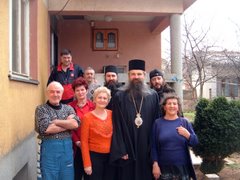
Patriach Pavle's Nativity Message

KiM Info Newsletter 06-01-07
Patriarch Pavle's Christmas Message
The Serbian Orthodox Churchto her spiritual children at Christmas, 2006
P A V L E
By the grace of God
Orthodox Archbishop of Pec, Metropolitan of Belgrade-Karlovci and Serbian Patriarch, with the Hierarchs of the Serbian Orthodox Church - to all the clergy, monastics, and all the sons and daughters of our Holy Church: grace, mercy and peace from God the Father, and our Lord Jesus Christ, and the Holy Spirit, with the joyous Christmas greeting:
PEACE FROM GOD - CHRIST IS BORN!
“Great indeed is the mystery of our religion:God is manifested in the flesh, vindicated in the Spirit,seen by angels, preached among the nations,believed on in the world, taken up in glory.”(I Tim. 3:16)
These words of the Apostle Paul, our dear spiritual children, most fully depict all the beauty of the joy of Christmas in which we truly participate in the great mystery of God descending from Heaven to earth and man’s ascending from earth to Heaven and sitting at the right hand of God the Father. This, in essence, is the divine sonship of everyone who desires it through an active faith. The Son of God came to call us into the everlasting Kingdom of God and to bring us into the reality of eternal life, being that He, our Lord, is always the Way, the Truth, and the Life (John 14:5).
The event of Christ’s birth from the Virgin Mary brings together all hopes and longings of mankind throughout the centuries preceding it, as well as the faith of all the centuries that followed it, and it will last throughout all the centuries to eternity. This is the fullness of time (Gal. 4:4), for God and man are united together in the person of Christ. God is born as a man without ceasing to be God, so that man can become “god by grace”, without ceasing to be man.
Rejoicing in eternal and indescribable joy because of the great gifts of God’s love, let us ask ourselves as believing Christians, called out and sent into the world to be “the salt and light of the earth” (Matthew 5:13-14), are we, and to what degree are we, truly responsible in our God-given freedom. It is not good to make excuses for ourselves to someone else and yet see his mistakes, for condemning is not the way of faith. Often times this is an obstacle on the road of life and too heavy a yoke for him who acts this way. This is why we turn to you, sons and daughters of Christ’s Church, “not as lords over your faith, but as helpers of your joy” (II Cor. 1:24). On bended knees we implore you: show love without hypocrisy toward one another and toward all people – “let us not grow weary in well-doing.” (Gal. 6:9) Let us work to carry out the lesson of our Holy Fathers: “Every Christian needs to be such a person that God is never ashamed of him.” We can fulfill this axiom, noble people of God, but only if we make some effort will we succeed in the good works of our noble faith.
There are many selfish people today who think that they can do everything alone. Many are the false “great” people and nations and, each thinks that he alone can change the world. That is why we need the faith of the righteous Joseph, the simplicity and hospitality of Bethlehem’s shepherds, and the wisdom of the Magi from the East who, guided by the star, brought gifts to Christ without fearing King Herod. Let us believe with the faith of the prophets and righteous from the Old Testament, and let us persevere together with the holy apostles in witnessing to the great Mystery of faith, knowing that besides Christ “there is no other name under heaven given among men by which we must be saved.” (Acts 4:12)
This knowledge in faith does not hinder us in love toward others. On the contrary, it directs us forward and opens us up to every person, regardless of who he is, how he prays, or whether he prays. For “God shows no partiality, but in every nation any one who fears him and does what is right is acceptable to him.” (Act. 10:35) Our faith that Christ is the Savior of the world and mankind, equips and enables us to always serve the improvement and salvation of the world. The Son of God, for us and our salvation, became man and our servant. So each one of us is called to serve for the betterment of life and for the salvation of all and everyone. How much better and different everything would be if we Christians would actively understand the meaning of the “great ones” serving the “little ones”! Life would be more beautiful and the world would be much better. It is possible — but only if each one conquers self-will, renounces his own selfishness, abandons personal self-interest, and exchanges it for a self-sacrificing and unselfish way of life.
We were committing lawless acts – let us stop, and God will forgive. The greatest error we commit is abortion, because we will not admit that it is the sin of murdering a child, motivated by the selfishness of unworthy parents. It is most hideous murder, the refusal of God’s blessing and the denial to a new person of the right to life. The unborn child is not a nameless embryo, a fetus; it is a person – a living soul. We implore you, dear parents, not to do this any more; do not close the door of your hearts and homes to the blessing of life. There is enough room and food for all. Remember those childless parents who with tears in their eyes beseech God to bless them with children! Do not let the lack of material possessions be an excuse for abortion. Do not cut yourselves off from God’s blessing!
We know that some self-proclaimed defenders of people’s rights will say that the Church is limiting freedom and the rights of people, but let it be known that we are counseling with love, without degrading. May God forgive their sin and may He bring them into the communion of love. We will rejoice if they favorably respond. Many nations give heed to their historical existence and eternal salvation, and our Serbian people have killed, regretfully, more unborn children than all our enemies in all wars put together. We would mention that in our homeland the annual number of deaths, more than twenty five thousand, is greater than the number of new births. It is hoped that this statistic will move many to a more responsible way of thinking and to better actions.
In doing good works, in forgiving and in prayer, we need to persist and endure to the end, for “when reviled, we bless; when persecuted, we endure; when slandered, we try to conciliate…” (I Cor. 4:12-13), knowing that “the victory that overcomes the world – (is) our faith.” (I John 5:4) Orthodox Serbs in Kosovo and Metohija experience and know this very well, along with all those who have been left homeless, driven by persecution from their homesteads. They bear the wounds of Christ on their bodies and are victorious over their persecutors. Many, because of their self-absorption and fear, do not understand them. They, like the early Christian martyrs and confessors, are victorious over those who think that they can reach their goal by defeating others. We deeply believe that the time will come when the aggressors will be put to shame. We pray for our enemies, that they may see that doing evil cannot bring good results to anyone. May it be known to them that after all debacles which they are inflicting upon others, in the end, they themselves will be defeated with hopelessness. And for them we pray that they may overcome “self” in order to become partakers of the peace which Christ gives.
Dear spiritual children, our holy Serbian Orthodox Church has survived all historical Golgothas and crucifixions by the joy of Bethlehem’s shepherds and by the wisdom of the Magi from East, and it will continue to survive forever, in conciliar unity with all the local Orthodox Churches which together comprise One Holy Church. In her fullness (sabornost) she gathers the entire Serbian population, on all continents and in all countries, and is open to all people of good will. She has gathered her faithful children throughout the centuries, walking the narrow path and building bridges of peace and love among people and nations.
We know well our downfalls, schisms and divisions. We pray to God that they cease, forever asking all of you to be one in our Lord, so that we may show others the pure faith and holy unity, all the beauty of faith in God and faith in the man of God. It will happen when we stop creating divisions among ourselves, mostly for foolish reasons. Let us strive, in the joy of the Christmas celebration, to reconcile ourselves and let us gather around the crib of the Divine Infant, overcoming all our senseless divisions!
Of course, it is necessary to think through everything, to encounter different opinions and to discuss things, but this cannot be a reason for hatred either among ourselves or towards anyone. The rule must remain in force which states: “he who would be first, should be servant to all”. Christ with His life showed all this, and we Christians have a sacred duty to affirm this life of service. Today is the most appropriate day to reexamine and correct ourselves and others so that our joy can be complete and lasting.
Every one of us needs to see in every other person the image of God, the image of our brother and of our eternal friend. Then will our hearts truly be Bethlehem’s cave in which Christ is continually being born anew. And the more hearts there are like this, the better everything will be and the better we will all be.
PEACE FROM GOD - CHRIST IS BORN!
Given at the Serbian Patriarchate in Belgrade, at Christmas, 2006. (Julian Calendar)
Your intercessors before the divine Christ-Child:
Archbishop of Pec, Metropolitan of Belgrade-Karlovci and Serbian Patriarch PAVLE
Metropolitan of Zagreb and Ljubljana JOVAN Metropolitan of Montenegro and the Coastlands AMPHILOHIJE Metropolitan of Midwestern America CHRISTOPHER Metropolitan of Dabro-Bosna NIKOLAJ
Bishop of Sabac-Valjevo LAVRENTIJE Bishop of Nis IRINEJ Bishop of Zvornik-Tuzla VASILIJE Bishop of Srem VASILIJE Bishop of Banja Luka JEFREM Bishop of Budim LUKIJAN Bishop of Canada GEORGIJE Bishop of Banat NIKANOR Bishop for America and Canada (New Gracanica Metropolitanate) LONGIN Bishop of Eastern America MITROPHAN Bishop of Zica CHRYSOSTOM Bishop of Backa IRINEJ Bishop of Great Britain and Scandinavia DOSITEJ Bishop of Ras and Prizren ARTEMIJE Retired Bishop of Zahumlje and Hercegovina ATANASIJE Bishop of Bihac and Petrovac CHRYSOSTOM Bishop of Osijek and Baranja LUKIJAN Bishop of Central Europe CONSTANTINE Bishop of Western Europe LUKA Bishop of Timok JUSTIN Bishop of Vranje PAHOMIJE Bishop of Sumadija JOVAN Bishop of Slavonia SAVA Bishop of Branicevo IGNATIJE Bishop of Milesevo FILARET Bishop of Dalmatia FOTIJE Bishop of Budimlje and Niksic JOANIKIJE Bishop of Zahumlje and Hercegovina GRIGORIJE Bishop of Valjevo MILUTINBishop of Western America MAXIM Bishop of Gornji Karlovci GERASIMBishop of Australia and New Zealand IRINEJ Vicar Bishop of Hvostno ATANASIJE Vicar Bishop of Jegar PORFIRIJE Vicar Bishop of Lipljan TEODOSIJE Vicar Bishop of Dioclea JOVAN Vicar Bishop of Moravica ANTONIJE
THE ORTHODOX ARCHDIOCESE OF OCHRID
Archbishop of Ochrid and Metropolitan of Skoplje JOVAN Bishop of Polos and Kumanovo JOAKIM Bishop of Bregal and locum tenens of the Diocese of Bitolj MARKO
[Path of Orthodoxy translation]

03 January 2007

Persecution of Serbians In the United States

Refugees Hunted by Over-Zealous U.S. Government Agencies, Serbian Bar Association of America
Serbian Bar Association of America
5315 N. Clark St., PMB 279,
Chicago, Illinois 60640

FOR IMMEDIATE RELEASE Saturday, December 30, 2006www.serbbar.org

CHICAGO - At least 45 U.S. citizens and permanent residents across the country have been selectively targeted, indicted and arrested on federal charges related to their refugee and immigration applications. Many more face immigration related deportation charges on similar grounds. The Serbian Bar Association of America has joined with the Serbian Orthodox Church of America and other national organizations in calling upon the U.S. Attorney General and or Congressional leaders to review and reject what appears to be an abuse of prosecutorial discretion by the various United States Attorney’s Office and the United States Department of Homeland Security, Immigration and Customs Enforcement.
During the past fifteen months, legal immigrants currently living in Arizona, Utah, Colorado, Florida, North Carolina, Wisconsin, Ohio and Illinois have been arrested on immigration charges related to refugee applications completed nearly ten years ago. In many instances, U.S. contracted refugee agencies assisted these individuals with their applications which are now the subject of the charges against them. By way of example, one woman was arrested for omitting “military service” due to her position as a cook for local military personnel.
Of major concern is the manner and method of prosecution of these individuals. Many had little or no knowledge of English, and wholly relied on these agencies to assist them with their immigration in order to leave their war torn country. Also disturbing is the fact that, no matter of ethnicity, all refugees from Bosnia were conscriptive soldiers during the war, yet only Serbs are being singled out in what appears to be a discriminatory purge of Serbian refugees.
The Serbian Bar Association of America questions the manner and method of these charges. In almost all instances, U.S. Department of Homeland Security agents made early morning raids of individual homes and made arrests at gunpoint frightening innocent women and children, where communication and notice to individuals would have sufficed. While the U.S. Governmental agencies purport the premise for these arrests was to capture those in this country “known to commit atrocities”, no such charges are leveled against any of these individuals. Moreover, no indictment carries war crimes charges yet these individuals are being treated like terroists.
It is of grave concern that the U.S. government is targeting Serbian refugees from the former Yugoslavia while other ethnic groups from the same region with ties to terrorist organizations are not being investigated. “These poor people fled the wrath and oppression of a fascist mujahadeen and relied upon the counsel of US appointed immigration officials in order to seek refuge and legal entry into the United States. Unfortunately, they again find themselves inappropriately targeted by authorities simply because of their ethnic background,” says Metropolitan Christopher, the senior Serbian Orthodox Bishop in North America.
The SBAA demands full disclosure of all files of all refugees from a similar time period, regardless of ethnicity, to determine whether this is a discriminatory purge of one ethnic group, and calls for all indictments to be held in abeyance until an investigation is fully conducted.
The SBAA strongly encourages all those interested to donate to the Serbian Refugee Defense Fund “SRDF”, sending those donations to the address above, and view specific information regarding these arrests on the SBAA website at www.serbbar.org. In addition, the website provides additional information about the rights of any individual facing similar mistreatment, and encourages all to download these basic rights and present them at time of arrest.
The Serbian Orthodox Church of North America and Canada and the following organizations are signatories to this release:
The Serbian Bar Association of AmericaSerbian Unity Congress
Serbian National Defense Council of America
Serb National FederationSerbian Brothers
Help Serbian American Medical & Dental Society

28 December 2006

UNMIK Official Mislead Public On Illegal Activity Near Decani Monastery

KIM Info ServiceDecember 28, 2006
Following yesterday's statements by UNMIK spokesman Neeraj Singh that there is no illegal construction in the UNMIK-defined protected zone around Visoki Decani Monastery and that claims of such construction are not based on fact, the administration of Visoki Decani Monastery issued a communiqué, which the KIM Info Service is forwarding to all media.

COMMUNIQUE

Decani, December 27, 2006

It is with great surprise that we received the statement of UNMIK spokesman Neeraj Singh who, according to Beta news agency, stated that "claims of illegal construction in the protected zone around Visoki Decani Monastery are not based on facts" and that the protection of cultural heritage is "one of the highest priorities for Kosovo institutions".

According to Singh's statement "every construction project in this zone is deliberated by local authorities by permission of the Ministry for Spatial Planning and Environment" and adherence to the provisions for the special zone is supervised by a special local committee, which approved three requests for economic and other projects.

Unfortunately, this statement by an official UNMIK representative not only rationalizes and covers up the fact that UNMIK executive decisions regarding the protected zone around Visoki Decani Monastery are being openly violated but also gives a completely warped picture of the actual situation in the municipality as well as with respect to Serbian spiritual and cultural heritage in Kosovo and Metohija as a whole. Therefore, we are forced to present several facts which demonstrate that the UNMIK spokesman is either unconsciously or intentionally deceiving the public, which does not contribute in the least to the resolution of existing problems and the establishment of an atmosphere of trust and confidence.

1. An official Kosovo police document dated December 9 confirms the violation of the executive order regarding the protected zone. The conclusion of the report, which is signed by the local police chief, Police Captain Bekim Avdijaj, and prepared on the basis of a complaint filed by UNMIK representatives for the district of Pec, Mr. Luis Perez, states:

"This case is evidenced case in violation of the Executive Decision of SRSG, for the Special Zoning Area. All necessary measures and procedures are undertaken regarding this violation. Case is completed and referred to competent Prosecutor’s office for further proceedings."

Unfortunately, the fact is that police undertook nothing and this illegal construction continued and was finally halted only after an intervention from the UNMIK leadership a few days ago after construction of the building was already completed.

2. UNMIK chief Dr. Joachim Ruecker spoke by telephone a few days ago with Visoki Decani Monastery and conveyed his firm assurances that illegal activity would be halted. The UNMIK chief also said he would be visiting the monastery in the near future.

3. The monastery received a visit today from representative for political and economic issues with the U.S. Office in Pristina, Mr. Tomas Yezdgardi, who upon learning of existing problems and plans for further illegal construction in the protected zone visited Decani municipality to speak with the mayor. Yezdgardi conveyed the firm position of the U.S. Office that UNMIK decisions must be respected, and that the illegal construction is unacceptable.

4. Finally, confirmation of illegal construction was given to Beta news agency on December 26 by Decani mayor Nazmi Selmanaj himself, who confirmed that "the municipal inspection has interrupted works being done without a license by a private businessman in the protected zone around the monastery, and it has ordered the building destroyed".

These four facts clearly speak about the problem of illegal construction, and the question really must be raised on the basis of what facts and in whose behalf the UNMIK spokesman is giving irresponsible and inaccurate statements to the press.
With respect to Singh's other claims, we feel it is necessary to explain that decisions about construction work in the protected zone, according to the executive order of the UNMIK chief, are not being considered by local institutions nor by the Kosovo Ministry for Spatial Planning but exclusively by UNMIK. According to existing legal provisions Kosovo institutions do not have the ability to make any sort of decisions contrary to the executive order of the UNMIK chief. Despite this, Decani municipality chose to ignore the illegally constructed restaurant where representatives of the municipality were regular visitors. Moreover, although informed about the expansion of the illegally built building in timely fashion, municipal officials again did nothing until pressed by international authorities. It remains to be seen whether the decision to remove the illegally constructed building as the mayor promised in his statement will actually be done.

By order of the UNMIK chief a local committee was formed to implement the protected zone around the monastery which includes representatives from UNMIK, the monastery, the municipality, the Kosovo Police Service and KFOR. The committee has only met once so far because for the past two years the municipality has been avoiding putting up signage marking the beginning and the end of the protected zone. The monastery has not approved any construction within the protected zone. Mr. Singh was probably thinking of one instance of using gravel from the river and two instances of controlled use of firewood from privately owned lots in the zone, none of which represented a threat to the environment or the monastery and UNMIK representative Mr. Perez approved in informal communication.

As far as the idea of a highway toward Plav Lake (Albanian inhabited part of Montenegro) and the construction of a mineral water factory by an Arab-Albanian company, the monastery has not given any sort of approval for this. Moreover, it is the firm position of the monastery that according to UNMIK regulations such activities are not legal, and that any sort of construction of highways and factories in the protected zone is unacceptable and represents a danger to the monastery and the natural ambiance. The unrelenting determination of the municipality to push these projects through without consulting with the monastery and contrary to UNMIK decisions shows that Decani municipality is obstructing UNMIK decisions, and the monastery has already informed diplomatic representatives in Pristina and the office of Mr. Ahtisaari in Vienna of this problem. The municipality's insistence that all industrial activity in the municipality be developed near the monastery has a clear political agenda with the goal of making it impossible for the monastery, the only Serb community on the territory of the municipality, to function normally.

The further attitude and handling of this and similar issues by Kosovo institutions will be a direct test of the sincerity of Kosovo representatives officially claiming that the protection of the heritage in Kosovo is their priority.

27 December 2006

Not Hikers, But Terrorists Roam Monastary Protected Zones

Decani: Smuggling drugs and weapons through Monastery protected zone
"The stories about development of tourism are nothing more than fairy tales because everyone knows there is no rule of law in this area and that the surrounding mountains are swarming with armed smugglers, not hikers and mountain climbers," concluded Fr. Sava.
KIM Info ServiceDecani, December 21, 2006
Despite the latest protests against illegal construction near Visoki Decani Monastery, the situation around this Serbian Orthodox holy shrine has not changed in the least. Moreover, during a meeting yesterday, Decani municipality openly announced construction of a highway to Plav passing right next to the monastery, which is completely against UNMIK restrictions applying to the protected zone around the monastery. As indicated in a previous KIM Info Service newsletter, the news was published in the Pristina Albanian language daily "Koha Ditore".

"This represents flagrant institutional terror implemented by local municipal officials belonging to the Alliance for the Future of Kosovo with the support of government circles in Pristina. From all that has transpired it is crystal clear that the promises of the Kosovo government with respect to their purported readiness to ensure the protection of Serbian Orthodox holy shrines are not sincere," said Protosingel Sava Janjic, commenting on the most recent decisions of Decani municipality. "We are deeply concerned by the increase in extremist activity on the territory of Decani and Pec," said Fr. Sava, adding that since 1999 Decani municipality has failed to enable the return of Serbs because this is opposed by local extremists headed by an ultra-radical organization of Kosovo Liberation Army veterans. "The stories about development of tourism are nothing more than fairy tales because everyone knows there is no rule of law in this area and that the surrounding mountains are swarming with armed smugglers, not hikers and mountain climbers," concluded Fr. Sava.

According to international police sources the Decani-Plav route has become one of the main channels for smuggling of weapons, drugs and white slaves. The intent of extremist circles is to build a better, wider road so that when the time right the violence can be expanded to nearby Montenegro. The triangle between Albania, Montenegro and Kosovo has already become a sort of El Dorado for organized crime and mafia, as Montenegrin police reports confirm (see article from the Podgorica daily "Dan" below). Until April this year all vehicles passing by Decani Monastery were searched by KFOR troops; however, after demonstrations and political pressure coordinated by KLA veterans under the leadership of Abdyl Mushkolaj and activists of Albin Kurti's "Self-Determination" an agreement of sorts was reached for vehicles not to be searched during the day. This represents a further security threat in proximity to the monastery.

Recently a significant weapons cache was found and confiscated near Pec which was intended for the use of Albanian paramilitary gangs in Montenegro which have already attempted to organize terrorist activities in this republic. The smuggling channels and accumulation of illegal weapons by extremists near Pec and Decani are well know to both international police and military experts who are following extremist activities on the territory of Metohija.


ARABIAN CONSORTIUM PLANNING FACTORY NEXT TO THE MONASTERY
Arab money for a factory near Decani Monastery

KIM Info-serviceDecani, December 22, 2006

After the news on continuation of illegal construction in the vicinity of Decani Monastery no concrete actions have been taken by the Municipality yet. In fact the monastery has been officially informed that the Municipality is planning another "project" in the area withing few hundred meters from the Monastery with the money of United Arab Emirates. An UAE Consortium is planning to open a factory of mineral water although no industrial activities in the area of the monastery are allowed by the executive decision of UNMIK administration. The representatives of the monastery rejected the meeting with municipal authorities and the Arab investors on this issue yesterday because such a request is considered a most blatant provocation.

At the same time the Monastery has learned that the local Kosovo police service failed to react against the illegal construction because the owner of the illegaly built restaurant has a brother who works in local police. "Decani area is like a feudal medieval society and everything functions on the basis of family links and the power of weapons. Institutions are just a facade behind which lawlessness rules", confirmed Fr. Sava. "At the same time the illegal restaurant is known as a hangout for local mafia and no one dares stop the illegal activities. Black jeeps with darkened windows are regularly passing near the monastery and no one knows where they are heading", said Fr. Sava expressing serious concern that institutional arrangements for protection of Christian sites in Kosovo would hardly work in the existing security situation. "To implement such an arragnement one needs stable institutions and the basic rule of law. Here, you can achieve something only making deals with criminal structures which is nothing but legalizing racket", concluded Fr. Sava.

Beside the already built illegal restaurant and a planned Arab factory near the monastery there are several other pending projects which would turn the area around the UNESCO World Cultural heritage site into an idustrial area which would completely block the life in the monastery and destroy its surrounding. An Albanian businessman who became a US citizen Florin Krasnici is pushing very strongly building af a new hydropower station with a dam and an artificial lake. Despite very clear restrictions his engineers have been seen in the area of the monastery taking photos and preparing documentation for the project. Florin Krasnici is known to wider public as one of most important weapons smugglers both during and after Kosovo war. In a documentary "Brooklyn Connection" Krasnici openly boasted of importing sophisticated anti aircraft guns to Kosovo despite KFOR check-points.International police sources suspect that extremist circles are already accumulating illegal weapons in Decani Mountains using the existing mountain road which goes to Albanian inhabited part of Montenegro and further to lawless North Albania. Various economic projects and the development of tourism are seen just as a handy cover.

Decani Monastery has been attacked three times after the war in 1999 by mortar grenades. In February and June 2000 extremists from the former KLA fired several grenades on the monastery compound. In March 2004 the mortar attack in which 7 grenades landed 50 meters from the church was stopped after the direct intervention of the NATO Headquaters in Naples and high diplomatic circles. Last year the chief of local war veterans of KLA openly threatened the monastery and Italian KFOR and in April 2006 they staged protests requesting KFOR protection of the monastery to be lifted.

Increasing numbers of smuggling channels between Montenegro and Kosovo
Smuggling knows no borders
Serbian original athttp://dan.cg.yu/index.php?nivo=3&rubrika=Drustvo&datum=2006-12-15&clanak=80633
Dan, Podgorica, December 15, 2006
Near the administrative crossing of Kula (between Kosovo and) Montenegro, police confiscated 5,438 cartons of cigarettes, and a few days later at the same crossing a truck was discovered illegally transporting one ton of fuel, Kosovo police advised. In mid-November a police patrol confiscated 3,283 cartons of cigarettes, which were confiscated and turned over to the customs service. In the village of Ponosec while searching an automobile police confiscated 20 metal boxes containing 10,800 7.62mm caliber bullets in a larger box hidden with bags containing animal feed. According to respected experts, the primary reason for the increase in smuggling from Kosovo to Montenegro in the last two years is poor security and porous borders.
Military-political analyst Milovan Drecun believes that the problem began when the army, the only organization able to confront the problem logistically and in terms of manpower, was withdrawn from the borders. "It's completely clear that the Montenegrin Ministry of Internal Affairs is unable to prevent the smuggling of weapons and other good and the infiltration of terrorists. The few cases revealed since the police assumed border security is just the tip of the iceberg of what is happening in reality. The smuggling triangle Kosovo-Albania-Montenegro has been functioning since 1999 when weapons, cigarettes, fuels and other goods entered by way of Montenegro. Now this has boomeranged on Montenegro," said Drecun.According to Drecun, all relevant international organizations are aware of this route and Montenegro will have serious problems in the future because of it."In a comprehensive UNMIK study on organized crime in Kosovo and Metohija that I saw there is information about well established and well organized channels for smuggling dutiable goods, drugs and humans, as well as that those channels include individuals close to Montenegrin political structure. As well, according to confidential NATO and KFOR information to which I have access, it is evident that one of the main drug smuggling channels runs from Turkey by way of Kosovo and Montenegro," emphasized Drecun.He emphasized that "there is no question that the Montenegrin regime has failed to do anything serious to secure the state border with Serbia toward the territory of Kosovo and the border with Albania out of practical political considerations."On the contrary, the Montenegrin regime has intentionally allowed a porous border for illegal transistors and smugglers. This danger to Montenegro will become very acute in the future because of plans by Albanian separatists to destabilize the state by injecting weapons. Finally, for years no one from the Montenegrin regime has cared to explain information that is constantly being circulated about joint illegal dealings by Albanian terrorists and criminals from Kosovo with individuals close to the top of the Montenegrin regime. This criminal business connection resulted in Albanian terrorists securing the dismissal of then director of the Military Security Agency, General Momir Stojanovic. All this should remind the regime of the old adage "he who plants squash with the Devil will find it bruises his head" - except this time around the citizens will pay the bill, not the regime."
M.V.R.-D.Z.
KIM Info-service ARCHIVE
2004 Archives: March April May June July August September October November December 2005 Archives: January February March April May June July August September October November December 2006 Archives: January February March April May June July August September October November December
More News Available on our:Kosovo Daily News list (KDN)

22 December 2006

Weapons Seized In Kosovo, Goverment Official Involved


KOSOVO GOVERNMENT INVOLVED IN ACCUMULATION OF ILLEGAL WEAPONS
Kosovo officials arrested after huge weapons haul
REUTERS, Thu Dec 21, 2006 6:35 AM ETBy Fatos Bytyci
PRISTINA, Serbia (Reuters) - Two officials of Kosovo's governing coalition have been arrested after police found a minibus packed with heavy weapons and ammunition.
A police source said the haul included a 12.7 mm anti-aircraft gun and more than 100 rocket-propelled grenades.
Local media reports said the find, made late on Wednesday in the Drenica region of central Kosovo, was the largest in Kosovo since the 1998-99 war and the deployment of NATO peacekeepers.
Three men were arrested, including a senior adviser to the Kosovo labor minister and a member of the governing Alliance for the Future of Kosovo (AAK), which emerged from the guerrilla Kosovo Liberation Army.
The find sharpened fears of unrest in the U.N.-run province, where major powers have delayed a decision on the demand of 2 million ethnic Albanians for independence from Serbia.
The Kosovo government issued a statement expressing regret for what it said was an isolated case. The AAK, a junior member of the governing coalition, said it was "surprised" that two of its members were involved.
The breakaway province, run by the United Nations since 1999 and patrolled by 17,000 NATO-led peacekeepers, is braced for possible violence after the major Western powers and Russia let slip a year-end deadline to decide its fate until Serbia holds a general election on January 21.
An influential Brussels-based think-tank on Wednesday warned against further delay.
The International Crisis Group (ICG) said the temptation to avoid a tough decision on independence must be avoided, or there could be a "major new crisis".
Some Kosovo Albanian leaders have warned of unrest, which would almost certainly target the remaining 100,000 Serbs. Groups of armed men have appeared over the past year, and rioters last month lobbed stones and bottles at the U.N. headquarters in the capital, Pristina.
NATO bombed Serbia for 78 days in 1999 to force out Serb forces accused of causing a bloodbath in a two-year conflict with separatist guerrillas. Ten thousand Albanian civilians died and almost a million were expelled.
Diplomats say the United States and its major European allies favor a form of independence supervised by the European Union. But Russian support for Serbia, which opposes independence, is hardening and could scupper efforts to solve the problem in the U.N. Security Council.
------------------------
According to Kosovo's leading daily in Albanian language KOHA DITORE Ministry of Labor which is lead by one of Ramush Haradinaj's closest aides was involved in riots of November 28 this year when the UNMIK and Kosovo Govenrment building were attacked. Vehicles of the Ministry of Labor assisted in bringing stones to the rioters (Comment by KIM Info)
NATO peacekeepers, police seize weapons cache in Kosovo
Associated Press: Thursday, December 21, 2006 6:21 AM
PRISTINA, Serbia-NATO peacekeepers and police seized a large weapons cache during a raid in Kosovo and arrested three suspects, a police official said Thursday.
Police raided locations in the village of Stutica, in central Kosovo, after receiving information on weapons smuggling late Tuesday, said police spokesman Veton Elshani. The weapons, which were being examined by NATO-led peacekeepers, included rockets and ammunition. Police did not have further details on the size of the cache.
Two suspects were arrested at the scene and police also arrested a suspect in eastern Kosovo, Elshani said.
Local media identified one of the suspects as a member of the Alliance for Future of Kosovo, part of the province's ruling coalition government, and the other as an adviser to the Ministry of Social Welfare.
The alleged involvement of a government official in the weapons seizure drew condemnation by Kosovo's government, which distanced itself from the official and commended law enforcement agencies for the seizure of illegal weapons.
Kosovo has been administered by United Nations mission since mid-1999, when a NATO air war halted a crackdown by Serb forces on separatist ethnic Albanian rebels. The province is patrolled by some 16,000 NATO-led peacekeepers, who are in charge of the overall security in Kosovo.
Tensions in the province have been increasing as U.N.-mediated negotiations are under way to resolve the province's future status. Kosovo's ethnic Albanian majority wants full independence, but Belgrade wants to retain some control over what it considers a crucial part of Serbia.
The U.N. envoy facilitating months of so far inconclusive talks between the bitterly divided sides is due to make a final recommendation early next year on the province's future.
Weapons seized, officials arrested in Kosovo
21 December 2006 14:19 Source: Beta
PRISTINA -- Kosovo police (KPS) and KFOR confiscated a large amount of weapons in Glogovac last night.
KPS spokesman said that a significant amount of arms and ammunition was found in a van in the village of Stutica, Glogovac municipality, and confirmed that three people were arrested.
However, he did not disclose the identities of those placed in police custody. The media for its part speculates that a Kosovo government official is among those arrested last night.
"We are still uncertain about the amount of weapons in question, since the search of the location continues. KFOR is involved in the investigation, since the weapons cache contained a certain amount of explosives, which falls under their jurisdiction", the police spokesman said.
Meanwhile, the Pristina media report that two members of Kosovo's ruling coalition are among those arrested, one of whom is allegedly a government official.
Radio Kosovo names the pair as Skenderbej Habibi and Naim Bazaj, Alliance for the Future of Kosovo members.
The government in Pristina issued a statement in effect confirming the speculation, expressing "strong condemnation of the involvement of one of its officials in illegal activities.
"The prime minister and the government condemn any illegal action regardless of who perpetrates it in the strongest terms and remains convinced that such people have no place in Kosovo's government", the statement says.
It goes on to congratulate the security forces on carrying out a successful operation of discovering and confiscating the illegal weapons.
KIM Info-service ARCHIVE
2004 Archives: March April May June July August September October November December 2005 Archives: January February March April May June July August September October November December 2006 Archives: January February March April May June July August September October November December
More News Available on our:Kosovo Daily News list (KDN)KDN Archive
Earlier Newsletters can be found at: http://www.kosovo.net/erpkiminfo.html Photo Galleries of the March pogrom are available at: http://www.kosovo.net/pogrom.html
Our Information Service is distributing news on Kosovo related issues. The main focus of the Info-Service is the life of the Serbian Orthodox Church and the Serbian community in the Province of Kosovo and Metohija. Disclaimer:The views expressed by the authors of newspaper articles or other texts which are not official communiqu

06 December 2006

Petitions To Sign to Call For The Release of Archbishop Jovan In Macedonia

KiM Info Newsletter 06-12-06
Primate of Orthodox Church in America calls for release of Imprisoned Archbishop Jovan
It has been 120 days since His Beatitude the Archbishop of Ochrid and Metropolitan of Skopje Jovan (John) has been imprisoned for second time in the state prison “Idrizovo” in Skopje, FYR Macedonia. The terror which the FYROM government, in interaction with the state-sponsored and self-proclaimed "Macedonian Orthodox Church", has been conducting over its own citizens, not only does it not cease, but it increases in force. Archbishop Jovan is the only Christian cleric in Europe who is imprisoned as a prisoner of consciousness under disguis of false accusations of money misappropriation. Blatant violation of basic religious rights in FYR Macedonia is a sad indication of absence of basic democratic standards in that country.
Metropolitan Herman calls for release of Archbishop Jovan of Ohrid
SYOSSET, NY December 1, 2006Orthodox Church in America In a letter dated December 1, 2006 and addressed to Nikola Gruevsky, Prime Minister of the Republic of Macedonia, His Beatitude, Metropolitan Herman, Primate of the Orthodox Church in America, expressed his deepest concern for His Eminence, Archbishop Jovan of Ohrid, who recently was imprisoned for the second time.
In the 1960s, the Orthodox Church in the Macedonian Republic unilaterally declared itself autocephalous, thereby breaking communion with the Serbian Patriarchate and the world's Orthodox sister Churches. The schismatic Macedonian Church has maintained a bitter dispute with the Serbian Church over the patriarchate's presence in the republic.
The patriarchate's Archbishop Jovan, who broke ties with the schismatic Church in Macedonia and returned to the patriarchate a several years ago, has been the target of anti-patriarchate parties and civil authorities. He was first arrested in July 2005 and sentenced to 18 months in prison in Skopje for allegedly "inciting national, racial, and religious hatred, schism, and intolerance." He was subsequently released until his most recent imprisonment.
The text of Metropolitan Herman's letter, a copy of which was also sent to His Holiness, Patriarch Pavle of Servia, reads as follows.
"Dear Mr. Prime Minister:
"My letter to you is motivated by deep respect for you and your office as Prime Minister and by feelings of good will for your nation of Macedonia and its citizens.
"As the Primate of The Orthodox Church in America I write to you in order to intercede on behalf of Archbishop Jovan, who is imprisoned for the second time. I appeal to you to extend your good offices to secure the reconsideration of the sentence imposed on Archbishop Jovan.
"That a hierarch is judged and imprisoned for speaking and acting in accordance with his conscience is a serious violation of both the freedom of conscience and the freedom of religious faith and practice. These freedoms represent the ideals of human rights characterizing the values of all civilized peoples. I encourage you to lead your government and nation in pursuing ways of settling disputed issues that are more appropriate than the imprisonment of religious leaders.
"We are also well aware that the Archbishop's physical health is precarious, and we trust that he is receiving all the medical attention and care necessary for his condition.
"I urge you as the head of a government that has asserted its desire for all citizens of Macedonia to be free and equal citizens to adhere to the international standards of human rights and religious freedom. By doing what is honorable and just in the case of Archbishop Jovan you will reveal before the international community that you stand by these principles in practice.
"The prayers of the hierarchs, clergy, monastics, and faithful of The Orthodox Church in America are offered to God for the health, well-being, and release of Archbishop Jovan. We hope that our prayers for you and your nation will guide your government to a just resolution of the most grievous situation of Archbishop Jovan – a situation which is grievous not only for him, but also for the Republic of Macedonia."
http://www.oca.org/News.asp?ID=1118&SID=19
5000 signatures for liberation of Archbishop Jovan on the ongoing petition
At the beginning of November, in the United States of America, an Internet petition was started for liberation of His Beatitude, the Archbishop of Ohrid and Metropolitan of Skopje, kyr kyr Jovan from the prison in Idrizovo (http://www.petitiononline.com/3001sd/petition.html).
Republic of Macedonia is the only country in the civilized world which displays rigid violation of the religious freedoms of its own citizens. Archbishop Jovan is still in prison and the state refuses to register the existence of the Orthodox Ohrid Archbishopric.
However, people from around the world, who care about the most basic principles of the free and democratic world, with the voice of reason, peace and good will, sign the Internet petition for liberation of Archbishop Jovan and reinstatement of the violated religious freedoms in the Republic of Macedonia.
So far the petition has been signed by nearly 5000 citizens (with different religious and national origins, among which there are Bishops, doctors, priests and eminent intellectuals), from different countries: the United States of America, Bulgaria, Sweden, Brazil, Canada, Australia, China, Serbia, Great Britain, Greece, Russia, Macedonia, Hungary, Germany, Slovakia…
Links to the petition have been published on several web sites. After completion of the Petition signing, the Petition together with the request for the Republic of Macedonia to cease the persecution and imprisonment on religious basis of its own citizens and to register the Orthodox Ohrid Archbishopric, will be sent to the American State Department, to the seat of the European Union in Brussels, to the Government of Germany as forthcoming President of the European Union, to the Government of the Republic of Macedonia and the other relevant international institutions.
The petition is ongoing.
Respecting the religious freedoms of all citizens – one of the conditions for the Republic of Macedonia to integrate in the Euro-Atlantic institutions
Recently, the deputy of the assistant secretary in the American Bureau for European and Euro-Asian questions, Rosemary di Carlo, was staying in a working visit in Republic of Macedonia.
She pointed out unambiguously that the obligations which Republic of Macedonia should fulfill so as to become a candidate for membership in NATO are the following: judicial reforms, fight against corruption, fight against human trafficking, and respecting the religious freedoms and rights of all citizens.
This information has been broadcast by all Macedonian media (for example, A1 TV, News, 25. 10. 2006; Dnevnik, 27. 10. 2006…).
The weekly Macedonian magazine with the biggest circulation”Fokus”, in its newest issue (number 591), has published its attitude about the incoming obligation of Republic of Macedonia:
“One of the conditions for entering NATO, was the guarantee for religious freedoms. The whole farce in the organization of MOC and Macedonian politics connected with the image and work of bishop Jovan is contained in this poor information…

Macedonian judiciary gave him a prison sentence on the base of his neighbors’ conviction that the building’s entrance smelled like incense instead of sauerkraut, which is interpreted as sowing religious and racial hatred. Meanwhile MOC was “enlightened” and announced defrosting of the dialogue with SOC since the way to autocephaly lead through Belgrade, and which is identical to what Jovan had claimed, for which in the public harangue he has been proclaimed a traitor.
As it comes to the state, it still refuses to register his religious organization, despite the pressure made by the deadlines. Thus the state has been caught in its trap and built the newest case against Macedonia. Now, if we want in NATO, we have to recognize Jovan. And, normally, we are all playing fools. We do not comment on the “condition” that Rosemary di Carlo has announced again. We do not comment on the decision made by MOC, neither. We hope that this shame will be forgotten…”
Problems cannot be solved by postponing them endlessly. On the contrary, they multiply.
It is a fact that in the Republic of Macedonia there are citizens, who belong to Orthodox Ohrid Archbishopric, and whose religious freedoms are fully taken away. Is it possible that the state forces those citizens to belong to the favourized religious community - MOC, to which they do not wish to belong!
Due to the insistence by the bishops of MOC, after many releases by the Principal Court Veles, Archbishop kyr kyr Jovan is in the prison “Idrizovo”. The reforms in the judiciary, the interruption of the political trials and imprisonments of Archbishop kyr kyr Jovan, and the registering of the Orthodox Ohrid Archbishopric, are in fact acts compatible with the European Convention for respecting human rights and freedoms, whose signer is Republic of Macedonia. Such efforts effectively, not only declaratively, will accelerate the integration of our country in the desired Euro-Atlantic institutions, thus putting it in the line of countries which cherishes the values of a civilization.
FOLLOW THE NEWS ON ARCHBISHOP JOVAN OF OCHRID ON:
http://freearchbishop.com/

04 December 2006

Ceku Rebuffed By Moscow

KiM Info Newsletter 01-12-06
Kosovo: Ceku Gets Cold Shoulder in Moscow Over Independence
Moscow, 30 Nov. (AKI)
Kosovo prime minister Agim Ceku got a cold shoulder from Russian leaders on Thursday in an effort to rig support for independence of the province which has been under United Nations control since 1999. Ceku's visit got a low profile treatment, aimed not to offend Belgrade, which opposes independence of the province in which ethnic Albanians outnumber Serbs by 17 to one. He met with deputy foreign minister Vladimir Titov and president of the foreign policy committee of the Russian parliament, Konstantin Kosacov, but failed to get Moscow's commitment for independence.
Kosacov suggested that the dispute should be solved in direct negotiations with Belgrade and offered Moscow's support in "establishing direct dialogue". He said unilateral proclamation of independence, without Belgrade's consent, would be a "dangerous precedent, contrary to European standards established after the Second World War". Kosacov told journalists, after meeting with Ceku, that these standards don't allow the change of state borders without the consent of all involved.
He actually echoed Belgrade's stand that any change of borders, or unilateral recognition of Kosovo independence, would destabilize the entire region and violate the UN Charter. "Russia could help in establishing such a dialogue which would lead to a compromise that would satisfy the Serbian and the Kosovo side," he said.
Belgrade has no authority in Kosovo since its forces were pushed out of the province by NATO bombing in 1999 and is offering ethnic Albanians a large autonomy. But ethnic Albanian leaders have said they would settle for nothing short of independence, hinting they might even resort to violence to achieve that goal.
Kosacov said Ceku has repeatedly stated the interest "to maintain open and constructive relations with Serbia, but only as two sovereign states". Titov said the search for a compromise solution, based on the UN Security Council Resolution 1244 should remain the basis for solving the Kosovo dispute.
Resolution 1244, which put Kosovo under UN control with strong international civilian and military presence, states that Kosovo is officially a part of Serbia. But the international community has been gradually moving towards granting Kosovo independence and, after eight failed rounds of negotiations, it is expected to make a final status decision early next year.
Russia is the only member of a six-nation Contact Group for Kosovo that has openly opposed.
Russia stresses need for negotiated, mutually acceptable solution on Kosovo's status
Associated Press: Thursday, November 30, 2006 1:34 PM
MOSCOW-Russian diplomats and lawmakers told Kosovo's Prime Minister Agim Ceku on Thursday that Moscow wants an agreement on the breakaway Serbian province's status to be carefully negotiated and acceptable to Serbia.
Ceku's visit to Moscow came amid a U.N.-mediated effort to determine the status of the province and Russian warnings that independence could set a precedent for Russian-backed separatist regions in the former Soviet Union.
In a meeting with Ceku, Deputy Foreign Minister Vladimir Titov emphasized that Belgrade and Pristina must seek "an effective, negotiated solution" to the dispute and stressed he need for continued international efforts to find "mutually acceptable outcomes," the Foreign Ministry said.
Kosovo has been run by the United Nations since 1999, when NATO bombing ended a crackdown by Belgrade on separatist ethnic Albanian rebels. The majority ethnic Albanians want independence, but its Serb minority and Belgrade want Kosovo to remain part of Serbia.
Russia, which shares Serbia's Slavic, Orthodox Christian background, sharply opposed the bombing and has stressed the need for a solution on status that suits Serbia. It has also paid close attention to the treatment of Kosovo's Serb minority.
Titov told Ceku that Pristina must abide by international norms on the treatment of ethnic minorities, provide for the return of Serb refugees to Kosovo and prevent extremist violence in the province, the Foreign Ministry statement said.
Ceku also met with members of the lower parliament house's international affairs committee. Its chairman, pro-Kremlin lawmaker Konstantin Kosachev, said legislators called for direct talks between Pristina and Belgrade and offered to mediate in "a dialogue to negotiate promises acceptable to both sides," the Interfax news agency reported.
President Vladimir Putin and other officials have said the determination of Kosovo's status could set a precedent for separatist regions in former Soviet republics, suggesting that the international community could not ignore the independence claims of regions such as South Ossetia and Abkhazia, which broke away from control of the central government in Georgia in wars in the early 1990s.
Kosovo Albanian PM says no Serbia accord
MOSCOW, Nov. 30 (UPI)
Kosovo's ethnic-Albanian prime minister says no compromise can be reached with Belgrade on a future status of the Serbian province.
Kosovo interim Prime Minister Agim Ceku, in Moscow for talks with Russian Foreign Ministry officials, Thursday said though Belgrade claims Kosovo is an integral part of Serbia, the arrangement is impossible, the Serbian news agency Tanjug reported. Ceku told reporters ethnic-Albanians do not want Belgrade govern Kosovo any longer, Tanjug said.
However, a Russian statement on the talks with Ceku said it is essential Serbian authorities in Belgrade and leaders of ethnic-Albanians work toward a compromise on Kosovo's future.
Martti Ahtisaari, the U.N. envoy chairing the Kosovo talks, is expected to announce early next year a decision on who will govern Kosovo once U.N.
administrators and NATO troops leave the province.
The Belgrade government, representing 100,000 Serbs who live in Kosovo, says the province will always be part of Serbia, while leaders of ethnic-Albanians, who make up 90 percent of Kosovo's 1.8 million population, insist on independence from Belgrade.
Kosovo Premier Leaves for Moscow Carrying Albanian Passport Pristina, 30 Nov. (Tanjug)
Kosovo Premier Agim Ceku has left for Moscow carrying an Albanian passport, the media in Pristina reported on Thursday, adding that a group of Kosovo journalists, who accompanied the premier, had been returned from the airport in the Russian capital because of their improper papers.Russia does not accept the documents issued by UNMIK, stated Ceku’s spokesperson Ulpiana Lama. Ceku has a Croatian citizenship, and receives Croatian retirement, and has Croatian passport, but he applied and obtained Albanian passport.

28 November 2006

NATO Reopens Bases In Northern Provinces of Serbia

Balkan reality intrudes on NATO's grand plans
November 28, 2006 8:24 AM
RIGA, Latvia-NATO leaders are preoccupied with the deteriorating situation in Afghanistan and an effort to transform their alliance into a global security organization. But it's still dogged by problems closer to home: the possibility of renewed unrest in the Balkans if Kosovo gains independence as expected next year.
Speaking before a summit in the Latvian capital, Secretary General Jaap de Hoop Scheffer made it clear that NATO could not afford to neglect Kosovo.
"I can assure anybody who wants to spoil things there that ... KFOR is there to prevent anything from happening," he said, referring to the NATO force that has been keeping the peace between majority ethnic Albanians and minority Serbs in the province since 1999.
On Tuesday, NATO's Supreme Allied Commander, Gen. James L. Jones, held up the flexibility of alliance forces in Kosovo as an example of how they need to be used in Afghanistan, where a number of contributing nations have placed restrictions, or caveats, on their use in the Taliban's southern strongholds.
"We have 16,000 NATO troops (in Kosovo), and there are virtually no restrictions no national caveats," he told a security conference.
"Kosovo was (also) overwhelmingly restricted by caveats, but we learned a lesson," Jones said, referring to deadly rioting by ethnic Albanians that shook the region in March 2004.
The need to keep a large NATO garrison in Kosovo has caused problems for Jones, who has been calling for the alliance to come up with 2,500 additional soldiers to beef up its 32,800 troops in Afghanistan.
Kosovo is the final unresolved problem stemming from the series of wars that followed the breakup of Yugoslavia in 1991, which claimed the lives of about 200,000 people.
The province has been an international protectorate since NATO forced the Serbian army to cede control following a short war seven years ago. The international community is now awaiting a proposal by U.N. special envoy Martti Ahtisaari on its future status.
Belgrade, which insists that the province must not gain independence, has already indicated it will not accept any proposal that severs its links to the province. But ethnic Albanians, who comprise 90 percent of Kosovo's 2 million population, are equally adamant that they will only accept full independence.
Complicating matters further for NATO is the likelihood that any precedent created by the breakup of an existing European state will almost certainly be exploited to justify secessionist moves elsewhere. This is particularly true of Georgia, whose breakaway regions of South Ossetia and Abkhazia are also intent on independence.
After a series of delays, Ahtisaari's ruling on Kosovo's status has been delayed until after Serbian elections in January. Expecting trouble, NATO recently dispatched reinforcements to the Serb-inhabited north of the province and reopened two army bases there.
"There is a real potential for renewed violence in Kosovo," said Tim Judah, a Balkan expert. "If there is a delay or if the resolution is unclear, Albanian hard-liners will start to lose patience and bust out their Kalashnikovs."
Judah predicted an "intermediate solution" for the province. "This in effect is that Serbia loses Kosovo, but Kosovo loses the north, a sort of Cyprus in the middle of Europe," he said.
Paradoxically, although NATO bombed Serbia in 1999, and although Belgrade remains outside NATO's Partnership for Peace program to groom potential candidates for membership, it is now preparing to welcome the first Serbian contingent in Afghanistan.
In Belgrade, a defense ministry spokesman said that 20 army doctors will join a Norwegian field hospital in the town of Mazar-e-Sharif in northern Afghanistan.
Serbia, along with Bosnia-Herzegovina and tiny Montenegro, expects to be inducted into the PFP next year. Meanwhile, two other ex-Yugoslav states, Croatia and Macedonia, are hoping to join NATO in 2008, along with Albania.
"By 2008, I hope we will have less NATO in the Balkans, but more Balkans in NATO," de Hoop Scheffer said Tuesday.

25 November 2006

Putin's Statement to Europe

President Putin is facing a smear campaign lodged by the western governments to discredit him. His diplomacy and his tact in the face of his adversaries really underscores his commitment to Holy Russia and its allies. In the end, we will recognize him as a great Statesman and the leaders of America as Robber Barons using everything they can to gain the transient economic edge. Russia is not gambling but the west is, and the west will lose this round. Please stop drinking your martinis and try to come sober to the table when discussing policies that effect us little people.
Europe has nothing to fear from Russia
By Vladimir Putin
Published: November 21 2006 19:41 Last updated: November 21 2006 19:41
I would like to share my views on relations between Russia and the European Union ahead of Friday’s summit in Helsinki, primarily their strategic aspects.
Russia is a natural member of the “European family” in spirit, history and culture. Though it is not striving to join the EU, when I consider the future of our relations I do not see any areas that are not open to equal, strategic co-operation based on common objectives and values. When speaking of common values, we should also respect the historical diversity of European civilisation. It would be useless and wrong to try to force artificial “standards” on each other.

In the past few years, the EU and Russia have become important political and economic partners. Such co-operation should not be used to the detriment of relations with other countries and regions. I personally believe this policy will benefit everyone, including the EU. Our relations are becoming mature and well structured. Co-operation between our industries is gathering momentum, and our justice and interior ministries are participating energetically in dialogue. We are promoting scientific, cultural and humanitarian contacts in a streamlined and systematic manner with the goal of establishing four areas of common interest: economic issues and the environment; issues of freedom, security and justice; external security, including crisis management and non-proliferation; and research and education, including cultural aspects.
We also have similar approaches to issues of international security. Russia and the EU stand for strengthening universal regimes, primarily the non-proliferation regime. In spite of tactical differences, we have a common desire to find a fair solution to the most complicated international problems, such as the Middle East conflict or the issue of the Iranian “nuclear dossier”.
Russia is closely watching the EU’s evolution, not least because the pace of development of our relations and their future depend largely on changes in the EU. The Union could remain a predominantly intergovernmental association or acquire supranational functions. Russia wants its largest neighbour to be stable and predictable, and hopes that changes and expansion will not erode the EU’s uniform legal framework, primarily in the sphere of ensuring equal rights to all EU people irrespective of country of origin, nationality and religion.
We are developing relations with the EU with a view to the future, not the present day. I firmly believe that dialogue should not be limited merely to technical or “industrial” issues such as quotas, tariffs and anti-dumping and technical standards, although these are important and should be addressed jointly. Rather, I think we should first decide what we want from each other over the next several decades and what we can do for our people.
Russia’s approach to the future of European integration is well known. Our main objective is to create a common economic space and guarantee freedom of movement for our people, as advocated by our business, cultural and scientific communities. A long and complicated road leads to the fulfilment of these objectives, which are nevertheless quite feasible. Many partners in the EU share this approach.
We will soon start working together on a new accord to replace the partnership and co-operation agreement expiring in 2007. We hope the EU-Russia summit in November will give a boost to the negotiations. Our dialogue so far shows that we see eye-to-eye on many provisions of the future agreement. Russia thinks it should be a compact but politically significant document geared toward the future and stipulating clearly defined goals and mechanisms for equal co-operation.
I hope that joint work on this document will bring Russia and the EU closer together. Future talks should not deteriorate into an exchange of complaints. We will not be able to turn a new leaf in the history of our co-operation if we succumb to fear of growing interdependence. Those who warn of the danger of Europe becoming dependent on Russia see Russia-EU relations in black and white and try to fit them into the obsolete mould of “friend or foe”. Such stereotypes have little in common with reality, but their persistent influence on political thinking and practice runs the risk of creating fresh divisions in Europe. The past must not be used to divide us, because we cannot rewrite history. Our current goal is to join forces so that Russia and the EU can build a common future as partners and allies. Russia is prepared to work for this and I hope a constructive approach will also prevail in the EU.
The writer is president of Russia
Copyright The Financial Times Limited 2006
Print article
Email article
Order reprints
Track this story
News alerts
Email - create a keyword alert on the subject of this topic
Desktop - download our application to receive instant alerts on this topic
Email summaries
Email - start your day with daily email briefing on this topic
RSS feeds
RSS - Track this news topic using our feeds

21 November 2006

U.S. Ambassador Polt Misguided Comments

During World War II, General Draza Mihhailovic and his chetniks, non-communist Serbian loyalists who sided with the Allies against the Nazis were betrayed by Winston Churchill, Harry S. Truman as the two threw their weight behind Serbia's Stalin backed Partisans. The head of the Serbian faction was Marshall Josip Broz Tito. After extermininating as many Serbs as he could, Tito further added insult to injury by declaring Kosovo-Metohija an autonomous province and allowing the enemies of the Serbian people to migrate and takeover lands. In this manner he continued policies and mechanisms put in place by the Ottoman empire to subjugate and spiritually exhaust the Serbian peoples. Although Ambassadors are supposed to be well versed in the histories of the countries they served, Mr. Polt has demonstrated a disturbingly myopic and distorted view of events leading to the excesses of the Milosevic regime. Just as the John Brown uprisings which occurred in the United States just before the civil war were a reaction to oppression, there was and in Serbia continues to be a legacy of injustice that the Serbian people have endured, first under the Ottoman empire, then under the communist and now under the nefarious economic and political machinary of the western powers. The west seems to be scared to death to suddenly wake up and find that the Russia and her allies are in command of a great deal of the natural resources that keep the entire world going. Instead of adjusting to the new reality, instead of working as a good neighbour, the West has chosen to carry its philosophy of domination of markets for its own needs no matter what the costs to others to an extreme position, which is now playing out over the attempt to further Tito's spiteful work and create an independent Kosovo-Metohija. Just before the civil war, the slaves were involved in various violent protests against their inhuman existence, and there were excesses. The John Brown uprisings are a case in point. However, the United States, for economic, political, social and perhaps for spiritual reasons realised that the country could not continue as one that promoted equality and liberty and freedom for all while it was dependent on a slave society. The little acts of rebellion only made this more clear. But in Serbia, the acts of rebellion against inhumane treatment is used to accuse and malign a whole race of people, minimizing the oppressions and sacrifices they have endured for over 800 years. Through the mouth of Mr. Polt, America is revealing itself to be the biggest, greediest hypocrite on the entire earth. They are the modern Ninevah, that the world is beginning to cry out against to God "Who has not suffered under her hand?!"
BELGRADE -- Michael Polt said that the status proposal will be given to both Belgrade and Priština several days after the elections.
(FoNet)The US ambassador to Belgrade told Radio B92 that Belgrade and Priština would play critical roles in the process of finding a Kosovo status solution, which means that the two sides would be responsible for the implementation of all agreements reached.The international community would play a central role; its responsibility would be to offer security and political presence in Kosovo. Polt said that Kosovo is high on the list of America’s priorities in Europe. He also confirmed the Contact Group’s stance that the Kosovo status proposal will be revealed as soon as the parliamentary elections in Serbia are held. “After the postponement, this means right after the elections, several days, a week or two, but soon after the elections, the two sides will be presented with Mr. Ahtisaari’s proposal. After that we wish to quickly continue towards the completion of the process.” Polt said. Polt also said that the preservation of territorial integrity is not a central question in the Kosovo discussions. “Should we protect the territorial integrity of every regime that chooses to kill its own citizens?” Polt asked, adding that it is in the international community’s best interest to offer everyone the same rights. “Belgrade will have to live with the results of the Kosovo agreement, as will Priština. Both sides can choose to continue resistance against it, fight against it and live in constant animosity towards such an agreement. If Belgrade rejects the reached agreement for Kosovo and says that they will resist it, I would like to know if the people of Serbia really want that kind of a future.” Polt explained. The US ambassador said that the possibility for violence breaking out in Kosovo still exists, but that it will not be tolerated. “A violent past exists in Kosovo and we cannot forget who started that past violence in the 1990s. It was the Milošević regime.” Polt said. “And of course there could be violence as a result of the agreement. I think that it would be a great mistake for whatever groups starts the violence, because it will not be tolerated by the international community.” he said.

Grenade Explodes In Classroom

PRISTINA, Serbia (Reuters) - A grenade exploded in a classroom used by Serb children in Kosovo on Tuesday, but the elementary school pupils escaped injury, police said.

A Kosovo police spokesman said the grenade exploded in a stove used to heat the classroom shortly after lessons began at around 7.50 a.m. (0650 GMT) at the Trajko Peric school in the village of Veliko Ropotovo near the eastern town of Kamenica.
"The stove was completely destroyed and some parts of the classroom as well," said spokesman Veton Elshani.
A Kosovo Serb education official said the children had been moved to another classroom minutes earlier because their teacher was absent, leaving the room empty. "So tragedy was avoided," Zivorad Tomic told the Serb state news agency Tanjug.
Kosovo is braced for a possible rise in ethnic violence following a move by major powers this month to delay a decision on the ethnic Albanian majority's demand for independence from Serbia.
This story extracted from an Reuter's story.

President Tadic Recovering From GallBladder Operation

Serbia president undergoes operation
November 20, 2006 5:24 PM
BELGRADE, Serbia (AP) -Serbia's pro-Western President Boris Tadic underwent a gall bladder operation Monday and was feeling well after the surgery, his office said.
The 47-year old leader, elected in 2004, was taken earlier Monday to a military hospital in the Serbian capital. He is to remain hospitalized for several days, his office said in a statement.
Last November, Tadic canceled official duties for a few days after he developed a severe cold. In 2004, he was hospitalized for more than two weeks with a lung infection.

History and Political Understanding in the Common Man

American's Lack of History Affects Understanding of Kosovo-Metohija

Michael Mennard writes in Washington Post 18 Nov 2006:
Americans don't understand or like history, which most other cultures accept and study as an invaluable source of knowledge and experience. Americans generally look at history as an unnecessary burden that can have only a negative influence on the present.

Your editorial regarding Kosovo, the very cradle of Serbia, showed such ignorance. Nowhere did it note that Kosovo has been part of Serbia since the Serbs moved to it in the sixth century, four centuries before any Albanians were heard of in the Balkans.
Moreover, the editorial said, "By incorporating Kosovo into a new constitution, Serbia's leaders staked out yet another of the reckless nationalist stands that have caused their country so much damage in the past 15 years."
Wrong. It is ignorance of historic facts displayed by The Post and other similarly inspired American publications that has caused so much damage to a small but brave nation and a loyal ally in two world wars. The Serbs do not want what belongs to others, but they will not give away what is rightfully theirs.
The United States and its citizens would react in the same way if someone suddenly decided that Southern California or New Mexico should secede just because Spanish-speaking Mexicans live there.
As for your specter of 2 million Albanians in Kosovo being enraged, they should just go back where they came from -- neighboring Albania. Most Albanians came to Kosovo during World War II or during the rule of Marshal Tito of Yugoslavia, which maintained an open border with Albania, its fellow communist neighbor. Since then the incoming Albanians have systematically pushed untold numbers of Kosovo Serbs out of Kosovo.
Your editorial writers should study history to ensure more meaningful and more accurate editorials.
-- Michael Mennard
Potomac Falls

21 November 2006

Dear Editor,

Although I agree with Michael Mennard's editorial in general, I feel compelled to say that comparing an hypothetical secession of California or New Mexico is not a good reference point. Those areas were taken from the Mexican Government just after it won its independence from Spain early in the 19th century. The Alamo is in actuality a glorification of a hostile takeover of land wanted by the United States government. Intrigue played a big part in the developments that led to citizens of the United States asking to have lawful Mexican territory annexed to the U.S. Colonists, supported by American citizen Stephen Austin, basically homestead on land already considered a part of the United States of Mexico. Yes he did purchase the land, but I don't think the Mexican Government expected him to hand it over to the U.S. The land grab by the United States of America was facilitated by unstable circumstances in Mexico's new government. The parallels to the Kosovo-Metohija situation is uncanny, and underscores the United States favoring of independence of this province of Serbia. Whether Albania has plans to incorporate an independent Kosovo-Metohija or not remains to be seen. So far its voice in this affair has been strangely mute. Maybe the U.S. thinks that it will gain some influence in the area (and irritate Russia) by acting as the Brits did during the Texas crisis in the late 19th century. The Brits thought to gain influence by supporting Texas independence as a way to continue to have an influence in the New World. The bottom line is that the United States move violated Westphalian Principles enacted in 1648. Now currently, the United States has violated International Laws concerning sovereignty of states, those states rights to self-determination and freedom from interference by other states. These are the issues that the Prime Minister of Serbia Kostunica brings up again and again, and which are ignored by Great Britain, Germany, and the United States consistently. I don't understand why our government is behaving so badly. It is acting as a surreal reincarnation of the 13th century King John, who was eventually forced to sign the Magna Carta. Maybe the other nations will have to stop bowing to America's supposed military might and demand that it act as a good neighbour not only in word, but in deed as well. Perhaps, if more of the U.S. citizens understood its politics in a historical context, our current foreign policy would mandate that we rectify our past mistakes by acknowledging Serbia's territorial integrity. But apparently in the minds of U.S. political leaders, that would constitute a negative effect.
xenia lynn teresa williams
Eugene Oregon

Solution Should Not Grant Kosovo Rights Normally Given to Sovereign States

Russia insists on all-party agreed solution to Kosovo
www.chinaview.cn 2006-11-04 04:25:32
BRUSSELS, Nov. 3 (Xinhua) -- Any decision on Kosovo's final status must be acceptable to all parties, Russian Foreign Minister Sergei Lavrov said on Friday, casting aside an imposed solution.
"It can only be a compromise, it has to be a decision which is acceptable to all parties," Lavrov told a news conference in Brussels after talks with Finnish Foreign Minister Erkki Tuomioja, representing the European Union presidency.
Lavrov warned that a decision made "from the top down" would "just simply fall apart".
The UN-sponsored talks on Kosovo's final status were launched at the end of 2005. Although the deadline was set at the end of this year, the negotiations are dragging on, raising the likelihood that a solution will be imposed.
The UN mediator for Kosovo Martti Ahtisaari has recently produced a draft proposal, which reportedly grants Kosovo certain rights normally enjoyed by sovereign states.
Lavrov said the proposal could be submitted to all parties with a view to future talks, but not necessarily as an ultimatum on any party.
Although technically still part of Serbia, Kosovo has been run by the UN and NATO since a NATO bombing campaign in 1999.