17 August 2006

West Still Agains Belgrade's Plan to Ensure Rights for Minorities

New UN governor rules out Kosovo partition attempts
Published: Wednesday, 16 August, 2006, 11:02 AM Doha Time
PRISTINA: Kosovo’s biggest challenge this year will be keeping Serb minority areas peaceful and staving off any threat of partition, the new UN governor for the southern Serbian province said on Tuesday.
Joachim Ruecker, a German diplomat, was confirmed on Monday as the sixth chief of the UN Mission in Kosovo (UNMIK) in seven years. He expects to be the last, as the West mulls granting Kosovo the independence its Albanian majority demands.
In his first news conference after his appointment was announced on Monday, Ruecker stressed that Belgrade’s idea of partitioning the province and annexing the northern, Serb-majority part to Serbia, is out of the question.
"UNMIK and KFOR (the Nato-led Kosovo Force) have increased their presence in the north and I think that was the most important development in recent months," Ruecker said. "We cannot and we do not accept partition as an option."
Kosovo has been under UN administration since 1999 following Nato bombing that expelled Serb forces to end what Western powers said was deliberate killing of civilians in fighting an ethnic Albanian rebel insurgency.
About 100,000 Serbs stayed on while up to twice as many fled revenge attacks after the war. Most live in a northern triangle of territory supported and serviced from Belgrade.
Ninety per cent of Kosovo’s 2mn people are ethnic Albanians. UN-brokered talks are under way to determine whether Kosovo will remain part of Serbia, as sought by the government in Belgrade, or becomes independent. The talks, which started in February, are expected to conclude by year-end.
Ruecker, 55, takes up his duties on September 1, replacing Soren Jessen-Petersen of Denmark who resigned in June.
He said his focus would be on building stable institutions, increasing the participation of minorities in political life and promoting economic development.
He added that he expected to be Kosovo’s last UN governor.
"A very important part of the mission’s work will now focus on preparing for UNMIK departure and preparing for the handover to the authorities and to the future international mission as defined by the status settlement," Ruecker said.
The European Union is expected to assume a supervisory role if, as expected, Kosovo is granted conditional independence. – Reuters

16 August 2006

Imposed Kosovo Independence Sets Dangerous Precedence

End Balkanization Now! By Aleksandar Mitic
An old saying in Montenegro used to say “Montenegro and Serbia – one family". Today, pro-independence graffiti in Montenegro read “Montenegro and the Basque Country – one family”.
Indeed, if the preliminary results of the Montenegrin referendum on independence are confirmed, the process of the balkanization of the Balkans will have scored one more point.
Some say it also paved a chance for many independence-hopefuls around Europe, be it in Catalonia, the Basque Country or Scotland, which have sent their observer missions to Podgorica to monitor the mechanics of intra-state divorce.
It might be contrary to the logic of European integration and the equation mark between the European Union and “borderless Europe”, but it is real and it is happening in 2006, just a few weeks before the June summit on “the future of Europe”.
As far as enlargement is concerned, EU leaders should answer the question: “Does a European future imply further balkanization of the Balkans?” or “Do the Balkans have to choose a nationalistic past in order to pave their way to their European future?”.
If the answer is yes, EU finance ministers should start planning a budget for more crisis management and Balkan nations should start digging out marching songs cds back from the basement.
If not, the “balkanization of the Balkans” must end. Now!
It must end now, because Montenegrin independence at least had a legal basis. Under the findings of the 1991-92 Badinter Commission on the dissolution of the former Yugoslavia, all six Yugoslav republics – and only republics not provinces -- had the legal right to become independent.
After Slovenia, Croatia, Bosnia-Herzegovina and Macedonia, Montenegro is the last former Yugoslav republic to seize the opportunity.
It means that Kosovo, a province of Serbia, does not have the right to secession. Indeed, an independence of Kosovo – against the will of Serbia – can only be illegal, one-sided and imposed.
As such, an independent Kosovo would be the real, universal opener of the Pandora box of separatism.
According to the UNDP, there are some 5,000 different ethnic groups living in some 200 countries in the world. According to the figures of the study “Minorities at risk”, some 509 ethnic groups in the world consider themselves as politically discriminated and want autonomies or states.
All separatist or independence-seeking movements in the world already have their eyes set on the resolution of the Kosovo talks, especially since most of them have suffered much more tragic conflicts and have waited for the solution to their problems much longer than has the southern Serbian province, populated by an Albanian majority.
Indeed, a Kosovo precedent would have world ramifications.
It could impact on the tense relations between two nuclear powers – India and Pakistan – disputing Kashmir, a region very much like Kosovo in terms of ethnic proportions, violence or religious symbolism.
It could have an impact on the world’s largest country – Russia – with Transdniestria in Moldova, Abkhazia and South Ossetia in Georgia seeking to integrate it and Chechnya seeking to separate.
The world’s most populous country – China – could face separatism in Xinjiang, not forgetting Taiwan and Tibet.
Eternal pragmatists should think about the impact of imposed independence on some of the world’s most important pipelines – winding their way through disputed territories around Georgia, Nagorno-Karabakh or a Kurdistan.
Back to the Balkans, people still do not know whether they will be part of the next wave of EU enlargement due to its “absorption capacity”, but they surely are themselves still digesting the last wave of balkanization from the 1990s.
In the news today, the High representative in Bosnia-Herzegovina Christian Schwarz-Schilling expressed his worry about the slow progress of reintegration of the southern Bosnian town of Mostar, divided between Croats and Muslims since a conflict which ended 12 years ago.
Near Prizren, in Kosovo, an Albanian mob clashed with UN police after attacking and injuring Serb lawyers investigating a war crimes case for the Hague tribunal. A local Albanian leader later explained it was a mistake: they thought they were attacking Serb refugees trying to visit their homes seven years after being brutally expelled.
So, what kinds of signals would the pursuit of balkanization send to the Muslims in the Sandzak area, the Albanians in southern Serbia or in western FYROM, the Hungarians in northern Vojvodina, the Serbs in eastern Slavonia, eastern Montenegro or eastern Bosnia?
Indeed, if “yes” to an independent Kosovo, why not a “yes” to an independent Republika Srpska for example – which also has a 90-percent majority seeking to break away?
I can almost feel some eyebrows raising.
But can there be any more “taboos” if there are no more principles?
TEXT TOOLS
Printer Friendly Version
Send comments to the author
ABOUT THE AUTHOR
Aleksandar Mitic is a Brussels-based Correspondent of the Tanjug news agency, a Lecturer at the University of Belgrade and Analyst of the Institute 4S.Aleksandar Mitic Archive -->
SERBIANNA COLUMNISTS
Carl Savich
Sam Vaknin, Ph.D
Christopher Deliso
M. Bozinovich
Marko Lopusina
TV Weber
Boba Borojevic
Sonja Jekic, Ph.D.
Miroljub Jevtic, Ph.D.
Johnathan Widell
Srdja Trifkovic, Ph.D.
Stella Jatras
Tatijana Lazic
Aleksandar Mitic
Vojin Joksimovich Ph.D
Russell Gordon
Visit the archives of the above columnists on serbianna.com or become a columnist yourself. Find out how.
TERMS OF USE
Opinions expressed by the author of this article do not necessarily represent the views of serbianna.com. Any comments you may have about the article send them to the author and not to serbianna.com


Views & Analysis
Kosovo Within a Democratic European Serbia By Boba Borojevic
Kosovo: The Power of Compromise By Alexander Mitic
Dividing the Pannonian Sea By Russell Gordon
Les Drysdale on His Tesla Monument By Boba Borojevic
IMF: Decrypting the diatribe By M. Bozinovich
Moscow Calling: Why Milosevic was never trated in Russia? By Jonathan Widell, Dr Patrick Barriot and Jacques Vergès
Religion & Politics in NATOs Pro-Albanian Policy By Miroljub Jevtic, Ph.D.
Acts of Prophet's Disciples By M. Bozinovich
Book Review: Mediterranean Odyssey By Carl Savich
The ICTY Report On Milosevic's Death By Jonathan Widell & Nico Steijnen
End Balkanization Now! By Alexander Mitic
Montenegro: Euro-Fantasy By Boba Borojevic
Yugoslavia and the Cold War Part 1 By Carl Savich
Copyright Serbianna.com Since 1999

If you cannot click to the additional commentaries above click on this http://www.serbianna.com/columns/mitic/008.shtml

14 August 2006

Anniversary Of the Death of Young Children In Kosovo-Metohija

On Sunday, August 13, 2006, it will be three years since killers opened gunfire on a group of Serb children bathing in the Pec Bistrica river and killed Panta Dakic (age 10) and Ivan Jovovic (19), wounding Bogdan Bukumiric (15), Marko Bogicevic (15), Dragana Srbljak (14) and Djordje Ugrenovic (20).
A memorial service for the Serb boys who were killed will be served in the church in Gorazdevac. A graveside service for Ivan Jovovic will be held at the Upper Cemetery and for Panta Dakic at the Lower Cemetery where they are buried.
The church board has called on all Serbs who are able to attend the ceremony on Sunday to do so in memory of the Serb boys so that one of the most serious crimes in the province since the arrival of UNMIK and KFOR is not forgotten.
Gorazdevac is the largest Serb village in Metohija and home to about 1,200 Serbs.
The highest UNMIK officials promised three years ago "that no stone in Kosovo would be left unturned" to find those responsible for killing two Serb boys and wounding four other children, all Serbs. However, three years after this heinous crime the perpetrators have still not been brought to justice.

Raskovic-Ivic Open Letter to Acting UNMIK's Shook

Sanda Raskovic-Ivic's open letter to Steven Schook
Radio Television Serbia
August 14, 2006

In an open letter to acting UNMIK chief Steven Schook, Coordinating Center for Kosovo and Metohija president Sanda Raskovic-Ivic reminded him that 230,000 Serbs have been forcibly expelled from the Province and that their return to their homes has been obstructed for no less than the past seven years.
This is occurring despite Resolution 1244 which tasks the UN Mission with ensuring peace, security and respect for human rights to members of all communities in Kosovo and Metohija, said Raskovic-Ivic in a letter published by [Belgrade daily] "Politika".
Stating that "Albanian separatists are carrying out a campaign of continuous and unsanctioned terror against Serbs", Raskovic-Ivic pointed out that every unpunished crime is, in fact, a double crime and that the international community is most responsible for the miserable and tragic situation in Kosovo.
"Albanian separatists have carried out hundreds upon hundreds of attacks on Serbs without anyone being held accountable for these crimes. The perpetrators remain free, and they are interpreting this as encouragement to commit new crimes," she warned.
Raskovic-Ivic reminded School that as early as July 22, 1999 Albanian separatists in the village of Staro Gracko, Lipljan municipality, murdered and massacred 14 Serb harvesters and that the perpetrators have never been brought to justice.
In Podujevo, on February 16, 2001, Albanian separatists planted a bomb under an Nis Express bus. Four people were killed and the criminals are still at large.
An even more heinous crime was committed in Obilic on June 23, 2003 when Albanian separatists massacred the Stolic family. "You are well aware that to this day this horrible crime has not been punished," she reminded Schook.
"You are also aware that the Albanian terrorists who killed two Serbs on February 3, 2000, with a hand grenade that hit a bus transporting Serbs near the village of Cubrelj have never been found," added Raskovic Ivic.
"There has been a lot of rhetoric and worthless promises made that the hideous crime committed in Gorazdevac on August 13, 2003, would be resolved. You certainly know all the details, that criminals killed two Serb boys and wounded four other children," she emphasized.
"Mr. Schook, it is high time for clear answers for every crime committed by Albanian separatists. It is your responsibility to ensure that these criminals end up in prison. It is also your responsibility, if they are not imprisoned, to explain why not," Raskovic-Ivic wrote in her open letter to Schook.

Raskovic-Ivic Comments

Serbia won’t allow division of Kosovo, says Minister
13 August 2006 15:49 Source: Beta
ŠABAC -- Dragan Jočić said that Serbia will not allow Kosovo to be divided.“Today the battle for Kosovo is being led at the discussions at which Serbia is stating that it will not accept anything that any free democratic country would not accept. Serbia will not be the first to give up its own territory,” the Internal Affairs Minister said at a ceremony where wreaths were placed on the monument of the Mišarska Heroes.He compared the demand for the independence of Kosovo with the amputation of an appendage. “You cannot amputate the limb of a patient on his deathbed without consent; much less amputate 15 percent of a democratic nation’s territory in the 21st century.” Jočić said. What is interesting is that Jočić’s comments come only a day after his party colleague from the Democratic Party of Serbia, Kosovo Coordination Centre President Sanda Rašković-Ivić, said that Serbia would be willing to divide Kosovo.


Serbs suggest partition of Kosovo after UN leaves

By Neil MacDonald in Larnaca, Cyprus

Published: August 14 2006 03:00 Last updated: August 14 2006 03:00
The head of Serbia's delegation on the future status of Kosovo has suggested partition of the disputed territory if no way can be found for ethnic Albanians and Serbs to live together.
In an interview with the BBC aired late last week, Sanda Raskovic-Ivic, the Serbian delegation leader, described partition as a possible "win-win situation" to replace the United Nations administration in place since the expulsion of Yugoslav Serb forces under Nato aerial bombardment seven years ago.
The partition idea, which defies the existing terms for UN-brokered talks taking place in Vienna, indicates the struggle on the Serbian side to win any political concession, other than guarantees of minority rights within an independent Kosovo.
Please see this and other stories at http://www.ft.com/cms/s/505af300-2b31-11db-b77c-0000779e2340.html.

11 August 2006

Alexander Mitic's Editorial from Serbianna.com

Kosovo: The Power of Compromise By Aleksandar Mitic
A true, balanced, and negotiated compromise on Kosovo's future status would swing the pendulum of Balkan stability towards the European path.
A manipulated, one-sided, and imposed decision would, however, open a Pandora's box of secessionist movements in the world and release the ghosts of a nationalist past in the Balkans.
As we approach the beginning of talks on the future status of the Kosovo province, it becomes crucial to grasp the full complexity of the Kosovo status issue.
There has been an attempt in the last year and a half to close down international debate before the status talks had even begun by suggesting that only independence is a viable solution for Kosovo.
The truth is, the issue of Kosovo's status is dependent on so many historical, legal, political, religious, economic, and demographic elements that it deserves, at the very least, a wide international debate on possible solutions and their implications.
To argue thus that only one solution is possible is not only flawed reasoning, but a dangerous and explosive recipe for future frustration, tension, and conflict.
There has also been an attempt to refocus and spin the talks in the direction of Kosovo's independence, from those who say that these are not really talks on the future status but rather on the terms of Kosovo's future independence to those who argue that the negotiations should be only about the position of the Kosovo Serbs in an independent Kosovo. Some also argued that the talks will be about finding a way to impose independence upon Belgrade. While there are a few officials who have, often privately rather than publicly, indicated their preference for such approaches, it must be said that these are completely contrary to international law.
RISKY BUSINESS
The aim of the talks on Kosovo's future status is to finally provide a fair, stable, long-term solution for this crisis region. The majority Kosovo Albanians must get a maximum of opportunity and real means to manage their future without feeling threatened, but also without endangering the welfare of Kosovo Serbs and other non-Albanians. The interests of Serbia, of which Kosovo is a part, the stability of the Balkans, and the worldwide impact of these negotiations are also crucial factors which must be taken into account.
Within the principles of international law and the preset recommendations of the international community's informal "Contact Group" – no return to the pre-1999 Milosevic-era situation, no joining of neighboring states, no partition – a number of possible solutions for the future status of Kosovo deserve to be examined.
There is also a number of pre-conditions for successful talks that must be met: artificial deadlines such as end of 2006 must not be used to the detriment of a sound solution; and the outcome should be an agreed, negotiated compromise, not an imposed, one-sided decision.
The breaching of international law and the creation of worldwide precedents should be avoided for the sake of regional and world security.
In this regard, it is of paramount importance that double standards must not be allowed to win over universal standards.
To claim that the Kosovo situation features "unique" characteristics and that its independence would not represent a precedent for triggering other crises elsewhere in the world is unlikely to convince everyone in the international community. What is it that makes Kosovo so unique? Ten years of institutional discrimination? Several thousand victims of a conflict between a repressive state security force and a separatist guerilla force? A majority ethnic group actively seeking independence? But the very same characteristics are shared by dozens of similar regions around the world. If every such case is seen as unique, international law becomes irrelevant.
Independence for Kosovo would indeed be a risky, unilaterally-imposed and ultimately wrong solution. Why would one side get it all, the other one lose all? Why reward seven years of Albanian violence in post-war Kosovo? Why break up Serbia, the most ethnically diverse country in the Western Balkans and create a second ethnic-Albanian state on one part of its territory? Where is the logic of European integration in this pursuit of Balkanization of the Balkans?
A BLUFFER'S GUIDE TO INDEPENDENCE
Bluffs and spin must not be used as arguments. To say, for example, that Serbia already lost Kosovo in 1999 is only an interpretation and does not stand in any single international document, let alone in the UN Security Council resolution 1244 that ended the conflict. In the resolution, "self-governing" is mentioned three times, "self-government" four times, "self-administration" once, "substantial autonomy" three times, whereas neither "self-determination" nor "independence" are mentioned at all. Did NATO intervene in 1999 to protect human rights or to provide the basis for secession? If Kosovo was lost to Serbia in 1999, why did it not obtain independence then? As far as the so-called moral argument that it is the violence of former Yugoslav president Slobodan Milosevic which lost Kosovo for Serbia, the Kosovo Albanians should be least inclined to favor it since their massive and systematic violence and repression of the Serb community in the last seven post-war years has taken all the "moral credit" out of their hands.
The same goes for the often heard assertion that Serbia should choose between Kosovo and the European Union. In fact, under the EU Thessaloniki agenda on the Western Balkans, Serbia has a clear European perspective and as the Western Balkans' largest country, it certainly won't remain a black hole inside the EU. To suggest that Serbia should give up a large part of its territory – which has been the cradle of its civilization, culture, and religion for nine centuries now – for the sake of possibly entering a supranational integration process two or three years earlier does not make much sense. No international or domestic campaign aimed at convincing Serbian public opinion on this one would succeed.
One of the most common arguments for the independence of Kosovo is that if the ethnic Albanians do not get what they want, they will stage mass violence against the Serbs, other non-Albanians, and the international troops. The argument points to the massive riots in March 2004 as a warning of what could happen if ethnic Albanian desires are not satisfied. But is the world really so afraid of such threats that it does not dare stand up to them? NATO seems ready to call this bluff. The Alliance's Secretary-General has warned on several occasions that violence as means of promoting political objectives in the status talks would this time be met with a robust response from 17,000 NATO troops in the province. Indeed, threats of violence must not be legitimized nor used as arguments.
Finally, it is most worrying to suggest that some sort of "conditional independence" should be the outcome of the status talks.
This empty formula is even presented by some as a compromise solution, because ethnic Albanians will have to wait a few more years for independence and give up on the idea of Greater Albania. Many of its backers suggest "conditional independence" means that Kosovo will be granted independence in phases, provided the majority ethnic Albanians finally start respecting the human rights of the Serbs and other non-Albanians. But this option is an insult to negotiators and 21st-century human-rights standards. If Belgrade is resolutely opposed to immediate independence, why would it accept independence two or three years from now? If even the most basic standards of human rights are not respected under international supervision, why should we expect that they would be in a conditionally independent Kosovo? And doesn't the "conditional independence" concept introduce a new kind of trade-off: respect for human rights in exchange for territory?
COMPROMISE: A WIN-WIN SOLUTION
Looking at the situation realistically and fairly, the most sustainable and just solution for the future status of the province lies between the standard type of autonomy, which ethnic Albanians now reject, and independence, which clashes with international law and is unacceptable for the Serbs in general and Serbia as a state.
A solution that would provide for a maximum of autonomy for Kosovo within the borders of Serbia could satisfy all the legitimate demands, including the Kosovo Albanians' demand to be self-governing, and it can protect the interests of non-Albanians in Kosovo and the interests of Serbia as a state. Such a solution would also comply with the principle of the inviolability of international borders.
Kosovo would enjoy full legislative, executive, and judicial capacity, a limited external representation – in particular regarding its full direct access to the international financial institutions – and most importantly, normalized relations with Serbia.
On the other hand, Serbia still has many positive things to offer Kosovo, including a strong push in its macroeconomic revival, a common market for goods, an integrated energy, electricity and infrastructure network, access to its health and education systems, a common fight against organized crime, and a joint contribution to regional stability and European integration.
At the same time, an autonomous Kosovo would still need to improve its treatment of the Kosovo Serbs and other non-Albanians. A wide-scale decentralization including a horizontal linkage of Serbian municipalities, which would benefit from the education, social, and health system of central Serbia, is a precondition for the survival of Kosovo Serbs, as suggested by UN special envoy Kai Eide.
This horizontal linkage is not a model for partition and conflict but, on the contrary, a model for integration and survival, as these municipalities would be fully integrated in the autonomous Kosovo system run from Pristina, while keeping some political links with Belgrade.
Considering all this, an autonomy for the Kosovo Serbs within a maximum autonomy for Kosovo inside Serbia appears as the most reasonable and viable long-term solution.
More than anything, it is a win-win solution. The Kosovo Albanians would finally get the means to manage their future and so will the Kosovo Serbs; Serbia would not have its borders changed and its historical and religious cradle amputated; Macedonia and Bosnia will receive guarantees that border changes in the Balkans are no longer tolerated; the EU would obtain regional stability and be able fully to take charge of its European perspective; the United States would be able to disengage its troops without losing its diplomatic leverage in both Pristina and Belgrade; Russia, China, India, and many other countries in the world would appreciate not having to deal with a dangerous secessionist precedent; the UN will see a major crisis issue resolved peacefully and with full respect for international law.
It is time to respect international law; it is time to find a long-term solution for Kosovo; it is high time to be patient, fair, sound, and consistent.
It is time for a successful compromise for the first time in Kosovo's long history.
Aleksandar Mitic is a Brussels-based journalist and one of the authors of the CD-ROM and Internet project "Kosovo 2006: The Making of a Compromise."
TEXT TOOLS
Printer Friendly Version
Send comments to the author
ABOUT THE AUTHOR
Aleksandar Mitic is a Brussels-based Correspondent of the Tanjug news agency, a Lecturer at the University of Belgrade and Analyst of the Institute 4S.Aleksandar Mitic Archive -->
SERBIANNA COLUMNISTS
Carl Savich
Sam Vaknin, Ph.D
Christopher Deliso
M. Bozinovich
Marko Lopusina
TV Weber
Boba Borojevic
Sonja Jekic, Ph.D.
Miroljub Jevtic, Ph.D.
Johnathan Widell
Srdja Trifkovic, Ph.D.
Stella Jatras
Tatijana Lazic
Aleksandar Mitic
Vojin Joksimovich Ph.D
Russell Gordon
Visit the archives of the above columnists on serbianna.com or become a columnist yourself. Find out how.
TERMS OF USE
Opinions expressed by the author of this article do not necessarily represent the views of serbianna.com. Any comments you may have about the article send them to the author and not to serbianna.com


Views & Analysis
Kosovo Within a Democratic European Serbia By Boba Borojevic
Kosovo: The Power of Compromise By Alexander Mitic
Dividing the Pannonian Sea By Russell Gordon
Les Drysdale on His Tesla Monument By Boba Borojevic
IMF: Decrypting the diatribe By M. Bozinovich
Moscow Calling: Why Milosevic was never trated in Russia? By Jonathan Widell, Dr Patrick Barriot and Jacques Vergès
Religion & Politics in NATOs Pro-Albanian Policy By Miroljub Jevtic, Ph.D.
Acts of Prophet's Disciples By M. Bozinovich
Book Review: Mediterranean Odyssey By Carl Savich
The ICTY Report On Milosevic's Death By Jonathan Widell & Nico Steijnen
End Balkanization Now! By Alexander Mitic
Montenegro: Euro-Fantasy By Boba Borojevic
Yugoslavia and the Cold War Part 1 By Carl Savich
Copyright Serbianna.com Since 1999
Terms of Use
Privacy Policy

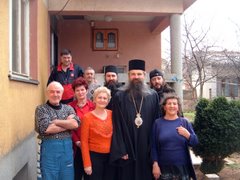
Interview with Amercan Council for Serbia

INTERVIEW Kosovo Within a Democratic European Serbia By Boba Borojevic

“The real problem in Kosovo is a noisy and violent Muslim minority within Serbia, which is concentrated in one part of Serbia namely Kosovo, and which is demanding detachment, against all legal principals, of a part of a sovereign state," says James Jatras, a lawyer for the Venable, LLP and an officer of the American Council for Kosovo.
"The current stand on Kosovo solution represents a very misguided perspective of an American approach to maintaining relationships with the Islamic world in the middle of a global war of terror,” says Jatras.
In this interview for CKCU 93.1 FM in Ottawa, Canada, Jatas presents an alternative policy: What and how should be done?
You have been in Belgrade lately and you have had talks in Washington with regards to Kosovo and Metohia. What is the current situation in Kosovo and Metohia?
Besides being in Belgrade I was also in Kosovo. The current situation of course is very, very bad. The protections for the Christian Serbian community there at the hands of Albanian Muslim violence are minimal, to say the least. The only supposedly positive trend about the level of violence is that there are fewer targets to be victimized. So, on paper one may say the situation is getting better when in fact it’s not. Our major concern, however, is not how bad things are right now or how they've been for the last few years, but rather the complete catastrophe that would occur if the agenda of some people to illegally detach Kosovo from Serbia and create an independent state were brought to fruition. It is on that front that we are making a major effort on behalf of the Kosovo Serbian community
In spite of the UN forces present in Kosovo Serbs have not been allowed to move freely?
Well, I think the situation is this. You have a NATO led force, K-FOR that has a military control there. You have an UN-led civil administration under which the so-called provincial institutions of self-government, which is the Albanian administration, functions. What we basically have there is a largely pro forma security presence from the international community, which provides a minimum, and I do mean minimum, level of protection that takes into account how much violence the Albanian Muslims are prepared to apply at the present time. I think the Albanians are conscious that if they can appear behave themselves while maintaining the threat of violence and the concept that if they don't get what they want there will be greater violence, they can help push through an agenda in favor of independence by an artificial deadline that they have set for the end of this year. So it’s not so much how much physical protection can be applied on behalf of the Christian Serbs, but rather how much violence do the Muslim Albanians think is prudent to unleash at this point of time.
What is the level of a political and other pressure that the West exercised on the Serb side in order to give up Kosovo?
Well, I think there are a couple different things. One is that if Serbia wants to join Europe in the EU, if Serbia wants to be treated as a normal country and not as a criminal on parole having to report in every 24 hours, that it needs to succumb to the demand to give up Kosovo. I think the implication behind that is that Serbia's economy and Serbia's commerce with the rest of the world will never return to normal until that is done. I think that is the main threat that they have. The contrary promise is that all these good things will magically come if you give up Kosovo. So I think it’s a combination of threats and promises regarding Kosovo.
Do you think these threats are real?
I think there is some substance behind them. Particularly on Washington's side and to some extent on some of Europeans, a sense in which we consider ourselves unfaultable, in that it is unthinkable that Serbia could not comply with our demand. Therefore we would almost be obligated to follow through with the threats, because we cannot have our will thwarted by a country like Serbia.
Why is it important to the international community to grant Shqiptars - Muslim Albanians independence and the Serbian land of Kosovo and Metohia?
For a few different reasons. One is bureaucratic inertia. Having dug themselves into Kosovo on the concept that the “Albanian majority in Kosovo” is being persecuted and having allowed them to sell the idea in Washington that somehow it is Albanian land, because they are “a majority”, nobody is really focusing on what is the real situation in the area. Namely, it is a noisy and violent Muslim minority within Serbia, which is concentrated in one part of Serbia namely Kosovo, who is demanding detachment, against all legal principals, of a part of a sovereign state. That factor is missed here in Washington.
There is another very, very strong element that fits in with a very misguided American approach to maintaining relationships with the Islamic world in the middle of a global war of terror. That is to say, we need to have some place where we can say our friends in Riyadh and Islamabad and so forth: here is the place where we are sticking up for Muslims. We believe that by doing so, or some of our officials seem to believe this, that this will somehow reduce a tendency towards radicalism. That they are going to ignore all the Wahhabist mosques being paid for by Saudi Arabia going up all over Kosovo. They are going to ignore the clear evidence of jihad activity and Al-Qaeda links in Kosovo. Because they think if they can deliver to the Muslim Albanians what they demand under a threat of violence, that this somehow will reduce their violent and radical tendencies. In fact it will do the opposite. It will encourage them.
I hope your listeners are going to websites like www.savekosovo.org to see that we have been quite forthright in presenting that evidence of jihadism in Kosovo. In our discussions with the officials here in Washington when the objection was raised,( which by the way was not very often, most of them who we've met have seemed quite open to this line of argumentation that are indeed hearing it for the first time), one of the things we've pointed out to them was, for example beheadings. Where else do we see this in the world? We see this in Kashmir. We see this in Chechnya. It’s been seen in Israel. It’s been seen in Iraq obviously. That this is based on Koranic principal of “smite the neck of unbelievers.” (Koran 47:4) This is a telltale sign of a jihadist mentality, such as those KLA guys who posed for a picture while stuffing those heads in bags and taking pictures of each other like they're proud of it -- which they are. Or of the example of Father Hariton of the holy Archangels monastery, whose tortured body was found in 1999 soon after he was kidnapped, but his head had not been found.
Albanian terror dates not from 1999. It goes back to 1960 and before that time. It is outrageous that the international community would allow Albanians to harass, expel and kill Serbs and tell the rest of the world that this is right and to demand independence for Albanians in Kosovo.
That is quite appalling. We keep hearing in conversations with some officials in which they kept telling us that there would be guarantees and protection for the Serbs -- whatever the outcome, and it is independence, which we all understand is what they all are aiming towards at this time, even if there is independence -- that protection will be there. Vladika Artemije and the delegation from Kosovo were very forthright in saying to them: why are we to believe that the level of protection will be greater after Kosovo would be given status as a sovereign state when you can't even provide us protections right now when there is a direct international control of Kosovo? Nobody believes that that is true. Nobody believes that those protections will be greater then, than they are now. And frankly, the people who said that to us do not believe it themselves.
Do you blame the UN and the EU representatives who are in Kosovo and Metohia right now and who paint this nice picture of Kosovo, for the current stand on Kosovo?
I do blame them in part. One thing about bureaucrats, whether they're Americans, Europeans, the UN or whatever they might be, is that they all can find a common language especially when they're justifying their own and other people's behavior on paper with regard to some of the reports that have been issued from Kosovo by these very same bureaucrats. Which, by the way, find that they're doing a good job. It’s kind of like students who are allowed to write their own report cards -- which not surprisingly is going to be an A every time. So I do blame them. But I also really blame some of the bureaucratic inertia and the completely misguided approach to cultivating Islamic opinion of some officials here in Washington who I think are completely mistaken when it comes to what realties are in Kosovo. It was our job to firmly but respectfully point out the errors in their policy and to try to rally a broader range of opinions to focus on Kosovo, whether the people were concerned about jihad terror or about religious freedom, or trafficking of drugs, or trafficking of slaves and so forth and to say: take a look at this policy. Here is an area where everything you know about the principles of American policy has stood on its head. It’s all completely backward. We are supporting de facto the jihadists, terrorists and criminals. That makes no sense at all. I think we're having some impact. I think we are getting some people who have forgotten all about Kosovo, their jaws hit the table. They cannot believe that this is going on. And we are convinced that if we keep on focusing our attention on this that something here in Washington is going to give. Let us be clear on something, if Washington does not insist upon independence of Kosovo it won't happen.
You are a lawyer, what is the right solution for the Kosovo crisis right now?
Well, to shift over to a profession, which I don't practice, of a lawyer to a doctor, the first principle of the Hippocratic oath is: Do no harm. You do not want to make a bad problem worse. I don't think anyone can look at however the bad situation in Kosovo is today and say it cannot get worse if independence is imposed. So, for us it is a task number one: “NO on Kosovo independence”. I hope people go to our web site www.savekosovo.org and send that kind of message to Washington officials. Even people in Canada and elsewhere may feel free to send the message to our officials, and to their own government and say “NO on Kosovo independence”.
There should be a genuine negotiation in the attempt to find a solution that accommodates the real human needs of Christian Serbs, Muslim Albanians, Romas and others who live in Kosovo rather than having an imposed dictated that only takes into account the interests and desires of one segment of the population.
I think if there is a backing off of this effort to impose independence and a good faith effort by the international community to find a negotiated solution (and also telling the Albanians: we're not going to impose a solution on your behalf), maybe an equitable solution could be found. But I think it ought to be negotiated. I do not know what final form that would take except to start with the fact that the human needs of everybody who lives in Kosovo can be accommodated within a democratic European Serbia. They cannot be accommodated if Kosovo is made an independent Islamic state
Jim Jatras, thank you very much for being with us today. We hope to have you with us again.
I am at your disposal and I urge people to visit our web site www.savekosovo.org.
James Jatras - Venable, LLP, is one of the officers of the American Council for Kosovo.
TEXT TOOLS
Printer Friendly Version
Send comments to the author
ABOUT THE AUTHOR
Boba Borojevic holds a degree in German language and literature and is a producer of a radio program 'Monday's Encounter' on CKCU 93.1 FM in Ottawa.Boba Borojevic Archive -->
AUDIO: Listen to interviews by Boba Borojevic
Intervju: Dobrica Cosic
Interview with Peter Brock author of ''Media Cleansing: Dirty Reporting - Journalism and Tragedy in Yugoslavia''
Interview with the Canadian Gen. Lewis MacKenzie
Interview With Former Canadian Ambassador James Bissett
Interview With Professor Barry Lituchy, founder of a Jasenovac Institute
All Audio requires RealPlayer
SERBIANNA COLUMNISTS
Carl Savich
Sam Vaknin, Ph.D
Christopher Deliso
M. Bozinovich
Marko Lopusina
TV Weber
Boba Borojevic
Sonja Jekic, Ph.D.
Miroljub Jevtic, Ph.D.
Johnathan Widell
Srdja Trifkovic, Ph.D.
Stella Jatras
Tatijana Lazic
Aleksandar Mitic
Vojin Joksimovich Ph.D
Russell Gordon
Visit the archives of the above columnists on serbianna.com or become a columnist yourself. Find out how.
TERMS OF USE
Opinions expressed by the author of this article do not necessarily represent the views of serbianna.com. Any comments you may have about the article send them to the author and not to serbianna.com


Views & Analysis
Kosovo Within a Democratic European Serbia By Boba Borojevic
Kosovo: The Power of Compromise By Alexander Mitic
Dividing the Pannonian Sea By Russell Gordon
Les Drysdale on His Tesla Monument By Boba Borojevic
IMF: Decrypting the diatribe By M. Bozinovich
Moscow Calling: Why Milosevic was never trated in Russia? By Jonathan Widell, Dr Patrick Barriot and Jacques Vergès
Religion & Politics in NATOs Pro-Albanian Policy By Miroljub Jevtic, Ph.D.
Acts of Prophet's Disciples By M. Bozinovich
Book Review: Mediterranean Odyssey By Carl Savich
The ICTY Report On Milosevic's Death By Jonathan Widell & Nico Steijnen
End Balkanization Now! By Alexander Mitic
Montenegro: Euro-Fantasy By Boba Borojevic
Yugoslavia and the Cold War Part 1 By Carl Savich
Copyright Serbianna.com Since 1999

Some History About Serbia

While Serbia and Pristina officials are regrouping some history from the Serbian Government Website.
Kosovo-Metohija province

Along with Macedonia, the southern Serbian province of Kosovo and Metohija is the only remaining flashpoint in the Balkans.The current political situation in Kosovo is characterized by separatist aspirations of Kosovo Albanians, a large number of expelled non-Albanians, mostly Serbs, almost 5,000 unsolved cases of missing persons on both sides, interethnic war crimes accusations, the absence of dialogue between ethnic Albanian and Serbian authorities, and a general atmosphere of insecurity for Serbs and other non-Albanians. All these difficulties strain the relations and living conditions in this part of Serbia.Neither the armed KFOR contingent, nor the UN Interim Administration Mission in Kosovo has managed a solution to the Serbian-Albanian conflict which has dogged the province for centuries. During the former, non-democratic regime in the late 90s, the conflict culminated in a bloody war which ended with the bombing of the Federal Republic of Yugoslavia and deployment of NATO troops (according to the Military Technical Agreement in Kumanovo).The UN Security Council subsequently adopted Resolution 1244, regulating the interim status of Kosovo and defining the means for restoring a lasting peace in the province, which is an integral part of the Republic of Serbia, i.e. The State Union of Serbia and Montenegro.We are providing extensive information on the province in hopes that UNMIK, the international community, the leading ethnic Albanian parties in Kosovo and Serbian and Yugoslav authorities will succeed in finding a joint solution to the Kosovo problem in accord with Resolution 1244. The responsible parties need to provide a peaceful and secure life for all of Kosovo's inhabitants, unhindered return of some 200,000 expelled persons and refugees, and wider and substantial autonomy for Kosovo within The State Union of Serbia and Montenegro.This province of Serbia occupies the area of 10,849 square kilometers of the territory in the South-West of the Republic. Pristina is its administrative, economic and cultural seat.
Territorial organizationKosovo and Metohija consists of 29 municipalities and 5 districts. The seats of the districts are Pristina, Pec, Prizren, Kosovska Mitrovica and Gnjilane.Kosovo and Metohija is separated from neighboring Albania by the mountain massif of Prokletije and is separated from Macedonia by Sar Planina mountain with two highest mountain peaks in Serbia: Deravica and Crni vrh. The province is made up of two regions which differ from each other in the soil content and climate and are divided by Cicavica and Crnoljevo mountains. The characteristic of the province is rapid economic and cultural development, high population density and demographic variety with a pronounced domination of Albanian population.
ReliefThis Southern Serbian province has a varied relief: it is edged with mountainous wreaths which are intersected by canyons and very wide valleys of the rivers Binacka Morava, Lab and Beli Drim.Kosovo is placed in the South-Eastern and Eastern part of the province, near the Morava-Vardar valley. It is primarily hilly land so that wealth in ores is the main natural potential of this region. On the other hand, Metohija is placed in the West and North-West of the province and consists of fertile arable land.The geographic division between Metohija and Kosovo caused the difference of their flora and fauna. Metohija has the characteristic influence of the Mediterranean thus being the region with the highest number of Mediterranean species of flora and fauna in the whole Serbia, while Kosovo does not differ from the rest of Serbia.
Traffic importanceKosovo and Metohija is the watershed of rivers which belong to Black Sea, Adriatic or Aegean basins that make this province an important traffic route. Its Eastern edge touches the Morava-Vardar direction where one branch of the highway goes, while another important Serbian traffic route, the Ibar highway, passes through the North-Western part of the province. There is a plan for the construction of a new highway which would take the western route from Nis through Kosovo, Metohija and Montenegro to the Adriatic coast.
PopulationAccording to the census from 1991, Kosovo and Metohija have 1,956,196 inhabitants which is slightly less than 20% of the total population of Serbia. There are many nationalities with pronounced domination of Albanians - 1,596,072 or 82.2% of the population of the province, or 17% of the total population of Serbia. Then come the Serbs - 194,190, Muslims - 66,189, Romanies - 45,745, Montenegrins - 20,356, Turks - 10,446, Croats - 8,062 and other smaller national and ethnic groups, 24 in all.The Statute of Kosovo and Metohija which is the basic legal act of the province, permits, besides the Serbian language, the official use of the Albanian language. Except for the language, the population differs in religion so that Serbs and Montenegrins are Orthodox, Croats Catholics, while Albanians are mostly Muslims as are the Turks and most of Romanies.
EducationThe educational system in Kosovo and Metohija consists of the following:Pre-school institutions;- Primary schools (983), where lectures are also held in the languages of the minorities;- Secondary schools (57), where lectures are also held in the languages of the minorities;- Pristina University consisting of 14 faculties where lectures are held in the languages of the minorities as well.
Science and cultureThe development of science and culture in Kosovo and Metohija received a powerful push forward only after they were attached to Yugoslavia in 1918 which excelerated during the last few decades. Pristina University, University Library, Kosovo and Metohija Museum, Institute of Cultural Monuments Protection, National Theatre in Pristina and other cultural institutions were founded. Thus began elimination of adverse consequences the Ottoman empire had left on this territory during the past few centuries.
EconomyThe economy of the province relies on local resources. Metohija is characterized by fertile arable land with many small rivers which provide water for irrigation and, in combination with the Mediterranean climate, give excellent yields. Except for cereals, this area is well known for its qualitative vineyards, all sorts of fruit, chestnut and almond.Kosovo is also known for the above mentioned crops, but cattle breeding is also very developed at the edges of Kosovo and Metohija valley.However, Kosovo region abounds with extraordinary ore and power potentials. As early as in the Middle Ages, the area around Novo Brdo was known for its money mint and rich deposits of silver. Silver lodes are exploited in Trepca even today, although the main production of the ore-smelting works is based on lead-zinc ore. This provides the basis for the development of other industrial branches in Kosovo. Large lignite deposits represent special wealth which is the basis of the thermal energy of this region and it supplies the electricity to a large portion of Serbia.The province is also rich with thermal waters with many spas surrounded by medical centres. Finally, tourist industry is specially enriched with numerous monuments from Serbian history particularly with medieval monasteries and fortresses. It is worth mentioning that the very term Metohija derives from the medieval name for the monastery land given to Orthodox monasteries by the Serbian rulers.

09 August 2006

Status Important In Discussing Minority Rights

Minority rights to be discussed only within framework of negotiations on status
Belgrade/Vienna, Aug 8, 2006 – The Serbian negotiating team stated following the first round of talks on minority rights in Kosovo-Metohija that discussion on rights of communities in Kosovo-Metohija will be possible only within the framework of negotiations on status.
According to the written statement by the negotiating team, read by member of the team and advisor to the Serbian Prime Minister Aleksandar Simic, the Serbian negotiating team holds the opinion that only real negotiations can lead to compromise between Serbs and Kosovo Albanians, and rights of communities can be discussed only within the framework of talks on the future status of Kosovo-Metohija and the future political order in the province. It is natural that a nation cannot be a minority in its own country, because Serbs in Kosovo-Metohija have always seen themselves as an integral part of entire Serbia and continue to do so. The Serbian negotiating team is confident that direct negotiations can result in agreement and a compromise solution regarding the status of the southern province.

All those responsible for crimes against Serbs must be brought to justice
Belgrade, Aug 8, 2006 – The Serbian government stated today that Atif Dudakovic and other war criminals who committed crimes against Serbs must be arrested immediately and tried in a court of law.
Filmed material which proves beyond doubt that Dudakovic perpetrated war crimes should be enough for any state to initiate action by police and judicial organs. Authorities in Bosnia-Herzegovina should take action as soon as possible and bring these war criminals to justice, reads the statement by the Serbian government.

Deployment of National Guard to Kosovo

Gov. honors National Guard members heading to Kosovo

By NICK BROWN, Sun Staff

Tori Carnes, 8, of Haverhill, watches as the Massachusetts National Guard's Task Force Patriot marches to their farewell ceremony at Minuteman National Park in Concord yesterday. Carnes' stepfather is among the more than 600 soldiers being deployed to Kosovo. AP PHOTO/JULIA MALAKIE

CONCORD -- Led by the Concord Minutemen, about 600 members of the Massachusetts Army National Guard marched across the North Bridge yesterday.
But unlike the patriots who fired the "shot hear 'round the world" in the name of American independence 230 years ago, these soldiers were marching -- even if symbolically -- toward peace.
Hundreds gathered at the Minuteman National Park site to honor the guardsmen embarking on a peace-keeping mission in Kosovo this fall.
While the troops' family members expressed some concern about the mission, most said they were not as worried as they would be if their loved ones were going to Iraq.
Members of the 181st Infantry Battalion and 1st Squadron 182nd Cavalry, based in Melrose, will be deployed to Kosovo sometime this fall to keep peace during a political transition.
Yesterday, they were honored by local residents, family members, and speakers, including Gov. Mitt Romney.
"I am humbled in your presence," Romney said in a speech addressing the battalions. "Your families sacrifice just as much as you do, if not more. You and your families are the courageous ones. ... Serving as your governor has made me see the debt I owe to you for giving so much to our country."
State Rep. Cory Atkins, a Concord Democrat, told National Guard members they would not be going overseas alone.
"Our thoughts, hearts and minds are with you," said Atkins.
But families of National Guard members were more proud than worried yesterday.
"I come from a strong family," said Mary Beth Doyle, whose son, Nathan, is a specialist in the 182nd Cavalry. "I'm proud of his decision. If it was Iraq and not Kosovo, I'd be a little more concerned, but no less proud."
Ron Cote, of Lowell, served in Vietnam and said he is proud of his 34-year-old son's mission.
"I'm fine," said Cote. "I think it's a mission that's a little less dangerous. ... (If Christopher were going to Iraq), it would be a little tougher, but if that were his mission, that would be his mission."
Said Joyce Cote, Christopher's mother, "I'm always worried. You never know what's going to happen."
First Lt. Joe DiGiovanni, who has a 2-year-old son and was in the midst of starting a law firm when he found out he would be heading overseas, said he is "looking forward to getting (the mission) done and heading home."
But DiGiovanni, a Peabody native, carries no bitterness at having to leave his family and career behind for up to 18 months.
"I was just starting to get established as a lawyer, but every soldier knows the commitment you make," he said.
His wife, Daniela, a native of Germany, said she views American politics "from a different perspective."
"If he were going to Iraq, that would be a different story," she said. "But if I go to Germany to visit my family or something, I can see my husband, so it's not as bad."
Spc. Chris Caswell, 22, of Peabody, is embarking on his second deployment. In 2004, he went to Sinai on a peacekeeping mission similar to the one his 182nd Cavalry will carry out in Kosovo. Caswell said he doesn't see a large difference between his mission and Iraq.
"Peacekeeping missions are more or less the same," said Caswell. "All you're doing is helping a country stay on its feet. It's just that Iraq has a few more problems."
The hardest part, said Caswell, is "leaving my family behind." The support groups, he said, are meant to show families of military that "they aren't in it alone."

08 August 2006

Clandestine Support For the Albanians Challenged

Western-European and North-American governments in Latin American and elsewhere have used certain tactics to further their interests in a Region. Imperialism by any country is a sin of covetousness, and as history shows it gives little regard for the people, the working class- affected by such policies. In the United States these policies have been promulgated by Wilson, Theodore Roosevelt, Clinton and most recently Bush. The United States is not the only nation who has committed these crimes; every nation-state in the world has submitted to the passion of covetousness and have glorified it--however, there have been a few treaties through recent history that have addressed this issue, especially after WWI, WWII and other wars. Before WWI the most signicant Treaty was that made at Westphalia which guaranteed recognition of the sovereignty of states and their right to self determination which also recognized their territorial integrities. Westphalia has been selectively adhered to, but this treaty has been the headwaters of the principles found in the Helsinki Accords and the UN Charter.

In UN Resolution 1203 it is made explicitly clear that clandestine support and training of terrorist groups in Kosovo-Metohija by the Contact Group or other external organizations and governments is prohibited because such activity is deemed--rightfully so-- detrimental to a peaceful solution, to a solution made through the mechanisms of reaching a compromising consensus. The two articles below emphasize that this is not happening in Kosovo-Metohija, and the transparency by which it is not being complied with indicates a commitment of certain elements to acheive their interests in the region no matter what.

There is a unwritten policy of detente, perhaps one would call it realpolitik, that endorses the standard of the double standard. This is one of the governing policies of European and North American governments whereby things are said and other things are done. Britain's support of Tito over Mihailovic during WWII is one glaring example for which even the United States (in their support of Britain's policies concerning the region) have had to apologise for-according to Michael Lees in his book the Rape of Serbia. The concern is that the use of the double standard in peace making efforts, the idea that one can morally and ethically use these means as a way of policy implementation, even to insure peace, makes the public recording and the honest efforts of those who are trying to live within the noble principles of International Law a waste of time. In of itself it becomes a war tool of attrition, of trying to wear the other party down so that they will capitulate and give in to outside desires for imperialistic hegemony, in areas that fall outside of their rightful sphere of influence. This is the result of covetousness writ large in the soul of a nation, irrespective of sovereignty, self-determination and irrespective of boundary integrity.

Nonetheless, Serbia has a public, internationally well known and transparent historical record of its boundaries, of the effects of alien aggression on those boundaries, and their historic, noble efforts to regain their rightful property. Now Serbia is trying to maintain and hang on to what has been theirs for many centuries under just laws and inspite of the unjust laws of the occupiers of their country. The fact that the current occupiers are the descendents of those people who were compelled by circumstances and at the cruel direction of an aggressive colonizing force to forfeit their own inheritance really doesn't complicate the picture at all. The acts of treason whether through weakness or deliberate determination doesn't negate that an act of treason has occurred and in thsi case it was an act against the fatherland whereby a soul was reared and spiritually nurtured. The Serbian goverment has been more than magnanimous to these descendents who in adhering to a different set of of worldviews are set to destroy any vestige of their first heritage, the Orthodox Church and the culture that it incultated with the consent of the people for which it is the shephard.
The very idea that Kosovo Albanians are seeking independence and that there is support for this by some entities in the Contact Group--apparently by enacting the standard of the double standard--is an grave injustice not only in respect to the ethical code of the Bible which the United States professes to adhere to; but pointedly--in respect to standards of international law that encodes the attitudes and behaviours nation-states must adhere to when trying to uphold and make real the idea of the dignity of mankind. Theodore Roosevelt's motto of speaking softly while carrying a big stick has no place in the discussions concerning Kosovo-Metohija, whether done transparently or clandestinely.
International community must stop crimes against Kosovo Serbs
Belgrade, Aug 7, 2006 – Serbian Prime Minister Vojislav Kostunica said after the latest crime in Kosovo-Metohija that international community must no longer watch dumbly as Albanian separatists kill and terrorise Serbs in the province.
Vojislav KostunicaPerpetrators of the crime against 18-year-old Ljubisa Janackovic must be revealed immediately and those criminals must be brought to justice, said Kostunica speaking to agency Tanjug, adding that this is one more in a series of crimes against Kosovo Serbs. He noted that the Serbian government will attentively monitor whether the international community will investigate this as well as previous crimes in the shortest time. Kostunica said that in front of the eyes of the whole world Albanian separatists are constantly committing crimes and conducting terror, trying to achieve their goal, that is, an ethnically cleansed and independent Kosovo. International community must stop the crimes that happen every day, as it is obliged by the UN Security Council’s Resolution 1244 to provide elementary peace and security in the province, he said. To make things even worse, this is all happening at the same time while negotiations on the future Kosovo-Metohija status are being organised in Vienna, said Kostunica. On Friday, Aug 4, at around 7 pm, 18-year-old Ljubisa Janackovic was stabbed twice in the shoulder in the village of Priluzje near Vucitrn. The incident happened near the river Lab.

Serbian government demands attackers on Ljubisa Janackovic are revealed and arrested
Belgrade, Aug 8, 2006 – Director of the Serbian government’s Office of Media Relations Srdjan Djuric said today that the Serbian government demands that criminals who attacked Ljubisa Janackovic in the village of Priluzje near Vucitrn are revealed and arrested immediately, that their names are made public and that criminal charges are pressed against them.
Djuric told news agency FoNet that the Serbian government demanded from international community representatives a clear response – whether the attackers on Janackovic were revealed and arrested and whether criminal charges were pressed against them. As a rule, a day or two after Albanian separatists commit a crime against Serbs, there are unarticulated and unclear statements saying that the attacker has been identified. If everything remains just with unimportant statements that “the attacker was identified”, then it is a direct support to criminals against Serbs in Kosovo-Metohija, Djuric warned. He also pointed out that it is necessary to make sure that Albanian realise that to commit a crime is not a normal thing and that whoever commits a crime must be responsible for it.

Shoygu Supports Kostunica's Position Which Is Based on International Law

Solution to Kosovo status must not be imposed or talks time-restricted
Belgrade, Aug 7, 2006 – Serbian Prime Minister Vojislav Kostunica met today with Russian Minister of Civil Defence, Emergency Situations and Natural Disasters Sergey Shoygu, who told Kostunica that Russia and President Vladimir Putin agree that the solution to Kosovo status must not be imposed or talks time restricted.
Shoygu stressed that when it comes to the issue of the future status of Kosovo-Metohija, Russia agrees with Belgrade's stance that the best solution to the province is essential autonomy within Serbia's existing borders, adding that all arguments stand in Serbia's favour.At the meeting Kostunica said that Serbia highly appreciates the principled stance of both Russia and its President Vladimir Putin.Kostunica said that the Serbian government's policy is based on the essential position that Kosovo has always been a constituent part of Serbia and will remain so. Kostunica stressed that Belgrade advocates compromise and a just solution for Kosovo-Metohija, based on the basic principles of international law and preservation of the sovereignty and territorial integrity of states, and that the solution is substantial autonomy for the province.
Sergey Shoygu
He emphasized that any imposed solution would have a serious impact on peace and stability, not just in the Balkans but further afield. He warned that Serbia as a state will reject any imposed solution and would, in that case, declare that Kosovo-Metohija is an integral part of Serbia.The collocutors said that economic and commercial cooperation between Serbia and Russia is improving, and special importance was attached to the memorandum of understanding signed between the Serbian government, “Srbija Gas” and Russian “Gazprom” regarding the construction of a 400 kilometere long gas pipeline through Serbia.Both sides expressed willingness for further improving overall cooperation between the two countries.

07 August 2006

Talks on Kosovo resume in Vienna

The divided town of Kosovska Mitrovica is marked by blast barriersDelegations from Belgrade and Pristina are holding talks in Vienna on Kosovo's future, focusing on decentralisation and community rights in the province.
There is international pressure on both sides to resolve the long-term political status of the province by the end of the year.
Decentralisation has been discussed by the ethnic Albanian and Serbian delegations in the past.
Tensions have been rising in Kosovo in recent weeks.
Local Serb politicians have heavily criticised the acting head of the United Nations mission, accusing him of favouring the Kosovo Albanians.
On Monday, a human rights group said the UN and the international community were failing to protect the rights of Kosovo's minorities.
"Nowhere [in Europe] is there such a level of fear for so many minorities that they will be harassed or attacked, simply for who they are," a report by London-based Minority Rights Group International (MRGI) said.
Deadlock
On Monday, the UN-brokered talks are focusing on the creation of Serb-run municipalities in Kosovo and how much authority they will have in the future.

No major breakthrough has been reached in previous rounds of the talks.
Two weeks ago, the presidents and prime ministers of Serbia and Kosovo failed to agree on the long-term political status of the province.
Technically, Kosovo remains part of Serbia but it has been run by the UN since the war ended in 1999.
Ethnic Albanian leaders are insisting on independence, while Serb leaders have said they are only prepared to negotiate a "substantial autonomy".
The Nato-led peacekeeping force, K-For, has recently reopened a base and deployed extra troops in Serb areas to the north amid rising tensions.

Kosovo's Future Status

Serbs, Albanians discuss situation in Kosovo
Front page / World
08/07/2006 13:34
Source:

The former foes will present their proposals to U.N. mediators on issues such as education, and discuss whether municipal officials would be able to appoint police and judicial officials in their areas, U.N. spokeswoman said.
BREAKING NEWS
Initially, the talks will not be conducted face to face, but instead U.N. intermediaries will shuttle between the delegations in separate rooms, before they meet for a joint session later Monday, Jiang said.
Kosovo's Deputy Premier Lutfi Haziri and the leader of the province's delegation in the talks said competencies over secondary health care, the university for the Serb minority in Kosovo and cooperation between the Serb municipalities and Serbia will also be on the agenda.
Ethnic Albanian and Serb negotiators have been meeting since mid-February to discuss ways of improving the Serb minority's rights in Kosovo. So far, talks have focused mainly on local government reform and on measures to ensure that Serb religious sites are protected.
Officials have failed to agree on the key issue of how many new Serb municipalities should be created in the province, with the Serbian delegation suggesting 13 and their ethnic Albanian counterparts proposing six.
Ethnic Albanians make up about 90 percent of Kosovo's population of 2 million. An estimated 100,000 Serbs remain in Kosovo, after about 200,000 Serbs and other minorities fled after Serb troops were driven out by a NATO bombardment in 1999.
The province, legally part of Serbia, has been run by a U.N. mission for over seven years, and U.N. envoys want to steer the two sides toward an agreement by the end of 2006, the AP rports.
Ethnic Albanians have agreed to participate, but it was unclear if Serb officials would attend Tuesday's discussion, after they had demanded the issue be considered only after Kosovo's future status was determined. They argued that the mechanisms for protecting Kosovo's minorities could not be defined before it was clear whether the province would be independent or remain within Serbian borders.

Unwillingness To Decentralise Threatens Serbian Rights

B92 News Politics Diplomacy & IR
Vienna talks yield no progress
7 August 2006 09:55 -> 20:27 Source: B92, FoNet, Beta
VIENNA -- The sixth round of Vienna talks on Kosovo decentralization ended without tangible progress.
Leon Kojen, Belgrade team coordinator, said after the meeting that there is a doubt as to the Kosovo Albanians’ readiness to accept the decentralization which would enable the Serbs to live in normal and safe conditions, as well as the return of the displaced citizens.Reiterating that Kosovo Serbs cannot be stripped of their basic rights, Kojen said that Belgrade will, as it has done so far, reject any attempt to limit their rights to an education, health care, security and the freedom of movement, “because there is no compromising on these issues”. “We hope to have an agreement soon, but only based on Priština’s acceptance of decentralization”, Kojen said. Serbian prime minister’s advisor Aleksandar Simić said that the latest round of talks exposed essential differences between the two sides where it concerned Kosovo Serbs autonomy and that no progress was made in the areas of the judiciary, health care, education, police or the public communal services. The Serbian delegation member Marko Jakšić told the journalists that he and the remaining two Kosovo Serb negotiating team members - Goran Bogdanović and Milorad Todorović - will not take part in tomorrow’s round of talks dedicated to minority rights. “We can only discuss that within the framework of Kosovo’s future status and political arrangement for the province. To accept minority talks out of that context would signify that we accept the status of a minority, and we cannot be a minority in our own country”, Jakšić concluded. Kosovo team chief in the minority rights talks Veton Suroi said that Priština was ready to listen to both the international community and the Serbs. “We are interested to hear from both on Belgrade’s position on the future of the Serb community in Kosovo, whether the realization of their rights can be assisted, how to establish cultural bonds between the communities, and other issues”, Suroi said at the Priština airport, before departing for Vienna. Priština delegation chief Lufti Haziri, Minister for Local Governance, said that Kosovo Albanians wished to complete the talks related to decentralization as soon as possible, in order to start the final status negotiations. UN Envoy for Kosovo status talks office expert Bernhardt Schlagek has confirmed that the Vienna talks that took place today left Belgrade and Priština entrenched in previous positions, however assessed there was some progress related to the police force. Asked to clarify that remark, Schlagek said the debate on the role of the municipal assemblies in the police chiefs appointments showed both sides willing to rectify their so far opposed positions

Russia supports Serbia

NewsTrack - Top News
Russia supports Serbia's Kosovo solution
BELGRADE, Serbia, Aug. 7 (UPI) -- A Russian government minister said Monday Moscow supports Serbia's stand to keep Kosovo as an autonomous Serbian province.
Sergey Shoygu, the Russian minister for civil defense and emergency situations, told Serbian Prime Minister Vojislav Kostunica the position of Russia and President Vladimir Putin is that Kosovo's future status must not be imposed, nor should talks about Kosovo's future have a time limit.
Shoygu said the best solution for Kosovo is to remain an autonomous province within Serbia's borders, the RTS Serbian radio-television reported.
Kostunica applauded Putin's stand on Kosovo and said the Serbian government's position is based on the fact that Kosovo has been and should remain part of Serbia forever. Kosovo was a part of the Kingdom of Serbia until it was annexed under the Ottoman Empire and many of its Albanians converted to Islam. It was reunited with Serbia at the dawn of World War I.
U.N.-led talks between Serbia and Kosovo's ethnic Albanian majority on who shall govern the province once the United Nations and NATO troops leave have been held in Vienna since February. But no major breakthrough has been reached.
The Serbian government in Belgrade, representing Kosovo's 100,000 Serbs, insists no independent Kosovo is acceptable, while leaders of ethnic Albanians, who make up 90 percent of Kosovo's 1.8 million population, insist on a Kosovo independent of Belgrade.

Pristina may propose establishment of municipality near Obilic

Vienna talks set to continue tomorrow

6 August 2006 13:51 Source: B92, Beta

VIENNA -- Belgrade and Priština will continue the Kosovo decentralization talks in Vienna on Monday.
It will be the sixth meeting of the delegations attempting to come to an understanding on the issue of establishment of new Serb municipalities in Kosovo. Attempts by the international mediators have failed in the past. At the last Vienna meeting, Belgrade insisted on 12 new municipalities, while Priština suggested five, adding expansion of an existing municipality into its offer.The press in Kosovo has speculated on a possibility that the Priština team might make a proposal to establish another municipality encompassing the villages of Prilužje, Babin Most, Plemetina, Grace and Crkvena Vodica, near Obilić, which have a Serb majority. It was announced that just as during the last meeting separate talks will take place, lead by the international mediators, ending in a discussion at the same table. Belgrade has welcomed this mode of negotiation, saying that it gave both sides more freedom to explain their position. After the July 24 Vienna meeting, the Contact Group has called on both sides to be more constructive when the talks resume. The international mediators have announced they will open the discussion on the rights and protection of Kosovo minorities the following day, August 8. Belgrade disagrees with this approach, since it considers Serbs in Kosovo a constitutive community, and would therefore like to see that subject discussed within the Kosovo status talks. Leon Kojen will lead the Belgrade delegation, taking part in the negotiations along other team members that include Aleksandar Simić, Goran Bogdanović, Marko Jakšcih, Dragor Hiber, Gordana Matković and Boško Mijatović. Priština team at the decentralization talks will be headed by the Minister for local governance in the Kosovo government Lufti Haziri, while Veton Suroi is set to lead the Priština delegation at the minorities’ rights and protection negotiations.

St. Stefan Fresco stolen from 14th Century Church

14th century Kosovo church robbed

6 August 2006 Source:Beta
Comments: 0
Send your comment

OBILIĆ -- Unidentified persons broke into the church, robbing and desecrating it, in a Serb village of Babin Most near Obilić.The thieves broke in last night around midnight after smashing the windows on the back side of the church, which also houses the parochial home in its immediate surroundings. The St Stefan fresco was taken from the church along with 50 000 dinars in contributions, the priests’ habits and ritual objects, while some ten frescoes and icons were destroyed and found smashed on the floor.“I heard nothing. We noticed that the church was robbed about seven this morning”, father Stevan Marković said and added that the damage was difficult to assess. Kosovo police service was at the scene and started an investigation, but would not communicate any details. The Church of the Holy Mother of God (Presveta Bogorodica) was built in the 14th century and is one of the oldest Serb churches in central Kosovo.

05 August 2006

The Prophecy Concerning Kostunica Begins To Manifest

5 August 2006
The Prophecy concerning Vojislav Kostunica was told during the 19th century by the Tarabic brothers from the village of Kremja.
PM to control anti-terror troops
BELGRADE, Serbia, Aug. 3 (UPI) -- Serbia will form an army anti-terrorist battalion that will be under control of the prime minister, Defense Minister Zoran Stankovic said.
While Stankovic hailed the move as improvement in putting the army under civilian control, a military expert said Prime Minister Vojislav Kostunica wants to have a grip on part of the military and thus diminish the role of the head of state as Serbia's supreme commander, Belgrade's B92 radio reported.
Following a peaceful disintegration of the Serbia-Montenegro union in May, Serbia's President Boris Tadic has been confirmed as the supreme commander of the Serbian military.
The anti-terrorist battalion, to be formed in September, will be run by Kostunica and not the Defense minister nor the head of the general staff, minister Stankovic said.
Military expert Aleksandar Radic told B92 the key rule of the military is that it has only one commander.
"It is obvious that the Serbian government wants to achieve control over the armed forces as soon as possible. Serbia still has to work out a new constitution and this is a chance for the government to diminish the role of the supreme commander until new elections are held," Radic said.
E-MAIL PRINT SAVE LICENSE© Copyright 2006 United Press International, Inc. All Rights

This is a WorldNetDaily printer-friendly version of the article which follows. To view this item online, visit http://www.worldnetdaily.com/news/article.asp?ARTICLE_ID=17674

Saturday, October 14, 2000
A NATION REBORN

Kostunica fulfills Serb prophecy?

'He would unite all the people, who would rise and chase out the Godless'
Posted: October 14, 2000 1:00 a.m. Eastern
© 2000 WorldNetDaily.com-->© 2000 WorldNetDaily.com

Editor's note: Reporter Aleksandar Pavic has been in Belgrade covering Yugoslavia's historic election and its dramatic aftermath for WorldNetDaily.com.

By Aleksandar Pavic © 2000, WorldNetDaily.com, Inc.


BELGRADE, Yugoslavia -- About a month before the Sept. 24 election day in Yugoslavia, then-presidential candidate Vojislav Kostunica visited the small Serbian village of Kremna. One of the first to greet him was Petar Tarabic, who came up to him and said, "Welcome, Mr. President, may the Lord bless you."
These words had special meaning then, because Kremna was not just an ordinary village. It had been made famous by the Tarabic brothers, who lived in the second half of the 19th century and prophesied much of what would befall Serbia in the 20th century.
They had predicted that Serbs would renounce their name, which they did by forming Yugoslavia in 1918. They predicted that a man who was not a Serb would come and rule for a long time, which corresponded to the 40-year rule of the communist leader Tito, who was not a Serb. They predicted the turmoil following Tito's death and a long war in which Serbia would not participate but would be blamed for, which corresponds to the wars in Croatia and Bosnia. After all that ended, "a man would come from the people, named after the village from which he came; he would unite all the people, who would rise and chase out the Godless," after which Serbia would become prosperous.
It happens that President Kostunica descends from the village of Kostunici, from which his grandfather took his last name. It further happens that the man who greeted him in Kremna was a direct descendant of one of the Tarabic brothers, Mitar Tarabic. Knowing all these things may make one stop wondering why all the recent events in Serbia have come with such an elemental force, why there seemed to be a guiding hand that steered events toward a preordained destiny.
Yesterday's all-powerful leader, Slobodan Milosevic, is being swept from Yugoslavia's political life with startling ease. The party that he still nominally heads, the Serbian Socialist Party (SPS), has even taken his photo off its official website. Yesterday's political allies are organizing press conferences at which they call for his replacement as the party's head.
Friday, it was the turn of Borisav Jovic, former president of Yugoslavia and former Milosevic political ally, who declared that he would return to the SPS if Milosevic left.
"Slobodan Milosevic should leave the SPS along with the top leadership and entirely new party organs should be elected," he said.
The party organization from Nis, the third-largest Serbian city, has called for Milosevic's replacement as SPS president. And the party has scheduled an early congress for Nov. 25, at which a new leadership is expected to be named.
As far as Milosevic himself is concerned, there is a consensus that he is shut up in his residence in Belgrade, still plotting to strike back.
Many think he stands behind the slowdown in the talks about the formation of a provisional Republic of Serbia government that is supposed to reflect the new political reality after the recent federal and local elections.
Indeed, Milosevic certainly still exerts personal influence on individuals dispersed throughout the country's administration, police, army and security forces. Many had tied their career fortunes to his own. Many owe their considerable wealth to the privileged economic status that he accorded them during the time of international sanctions. Some are wanted by the Hague War Crimes Tribunal.
But the feeling here is that any individual efforts at sabotaging the counterrevolution that is taking place would simply serve to help sweep away the remnants of the old system even more quickly. Strangely enough, the strong koshava wind that blew so furiously during the days preceding the fateful Oct. 5, when the federal parliament and the state television were overrun by a tidal wave of half a million people, and which afterwards slowly died down, has picked up again. Even for the most stubborn skeptics, it has become difficult to ignore the signs from above.
All this does not, of course, mean that everything is blissful, that there is no need for concern. Actually, the battle for Yugoslavia's soul has just begun, which was perhaps the basic point of the struggle against Milosevic's regime: to replace raw propaganda for something that more closely resembles real information, to face real choices and temptations, not those manufactured inside the artificial world of a hermetically closed jar. The winning DOS coalition is a heterogeneous mix of betrayed patriots, professional dissidents and New World Order mondialists -- both paid and unpaid. To the credit of all, they had the wisdom to coalesce when they realized the threat to their country and/or their own well being had become significantly greater within the country than without.
And, naturally, once the battle is over, they will slowly part company and each will assume his true role. Kostunica, the new president, is already faced with a latent challenge from inside DOS on the part of campaign manager and president of the Democratic Party, Zoran Djindjic, who many have claimed is tied to German and U.S. interests. That will be a battle worth watching, once it articulates itself, for its outcome will clearly define the future of the country.
Nevertheless, the Kremna Prophecy predicts eventual prosperity for Serbia. It also predicts another thing: namely, sometime after peace finally comes to Serbia, "there shall be a big war in which great powers over the oceans will take part; fiery balls shall fly over Serbia, but Serbia will be spared from this war."
Watching the latest events in the Middle East, one cannot help but wonder. The "shot heard around the world," fired by a Serb, Gavrilo Princip, at Archduke Franz Ferdinand in Sarajevo in 1914, brought about World War I, which really marked the end of the old world and the beginning of the new.
Is Serbia's fate to be the harbinger of conflicts that give birth to yet a new era?
Previous stories:
Yugoslavia's happy counter-revolution
Milosevic's reign teeters
Milosevic's reign to end?
Church leader congratulates Kostunica
Weathermen on strike in Yugoslavia
Victory tear gas
AleksandarPavic served as chief political adviser to the president of Republika Srpska, the Serb entity in Bosnia-Herzegovina and as an adviser to the late Prince Tomislav Karageorgevitch of Yugoslavia. Pavic is currently translating Prince Tomislav's memoirs into English.